Fireman’s lift

The former administration block of Runwell Hospital

Runwell Hospital, which closed in 2010, opened in 1937 as a mental hospital for the boroughs of Southend-on-Sea and East Ham, both then in the county of Essex. It was state-of-the-art, being built on the colony plan, with ward blocks widely spaced out on the 509-acre site. Since the closure of the hospital most of the original buildings (designed by architects Elcock & Sutcliffe) have been demolished; prominent survivals are the administration block (shown here) and the chapel, the latter in rather a sorry state and awaiting alternative use. Otherwise the site is being developed for housing (‘St Luke’s Park’, named after the chapel).
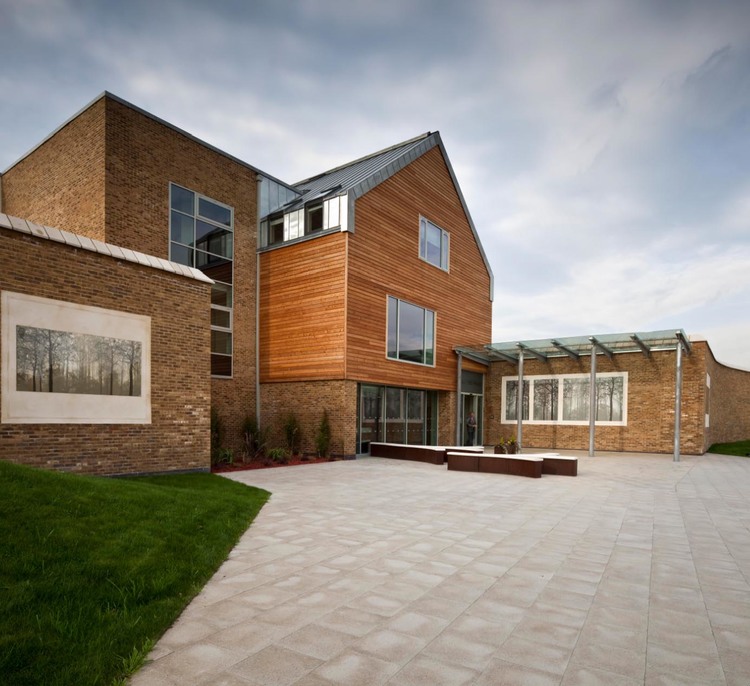
Brockfield House, entrance, showing some of the pictorial panels by Jacqueline Seifert.

One part of the site was retained for a secure hospital: Brockfield House, which opened in 2009 and was in its own very different way equally state-of-the-art. It provides forensic mental health services for people detained under the Mental Health Act or Court Order, in conditions of low and medium security (Broadmoor Hospital, to make the obvious comparison, provides treatment and care in condition of high security). When it opened it was compared, not unkindly, with a hotel, so sensitively was it designed and so well is it equipped. There are high security fences, but the layout of the building is such that they are kept to a minimum.

Lucy and I went there last week for a Firebreak pass-out. Firebreak is a five-day course run by Essex County Fire & Rescue Service that aims to improve the lives and increase the confidence and self-esteem of a wide range of people of all ages (but mostly young people) and in all situations. The Service runs dozens of courses each year, and the one in Brockfield House must be one of the more complex to organise. Normally they take place at fire stations, but in this case all the equipment (including a fire engine) must be brought to the site each day. A regular component of the course is working with ladders, but that is clearly not an option in secure hospital. It is not always possible to find enough suitable candidates, so on this occasion there was a team of eight, rather than the usual twelve, meaning they had to work that bit harder.

After passing through security and being issued with personal alarms (which we never came close to wanting to use) we met the lead instructor, Mark Crouch, and his colleagues in the hospital gym, and then trooped out to an area at the back of the hospital where seating was set up for the spectators – ourselves, a few patients’ family members, hospital staff, and quite few graduates of previous Firebreak courses who were still at the hospital. The team of eight were put through their paces, deploying hoses, performing CPR on a dummy, and generally going through the drill. At the end they lined up (by this time in quite a prolonged shower of rain) and I presented them with their certificates (dummies, actually, the real thing being more like a log book that was inside in the dry). Then we all returned to the gym for much-needed tea and biscuits.

I wish: I wish more people could witness an event like this and see what wonderful work Mark and his colleagues are doing to improve the lives of the people they work with. The positive effect, on the current team and older graduates, was plain to see. I wish more people knew of the dedication of the staff at Brockfield House, who provide a very high level of care. I wish I could include some photographs of the drill, and of the individual team members, all of whom were delightful to talk to. I wish more of their families had been there to support them and be proud of what they had achieved in just five days. I wish them the best of luck for the future, and hope that this experience has helped speed them along the road to recovery.

It was a joyful occasion, and one for celebration, but we felt sad as we drove out through the high gates, not knowing what lay ahead for the people we had met, nor indeed what had brought them there in the first place.
All in a day’s work

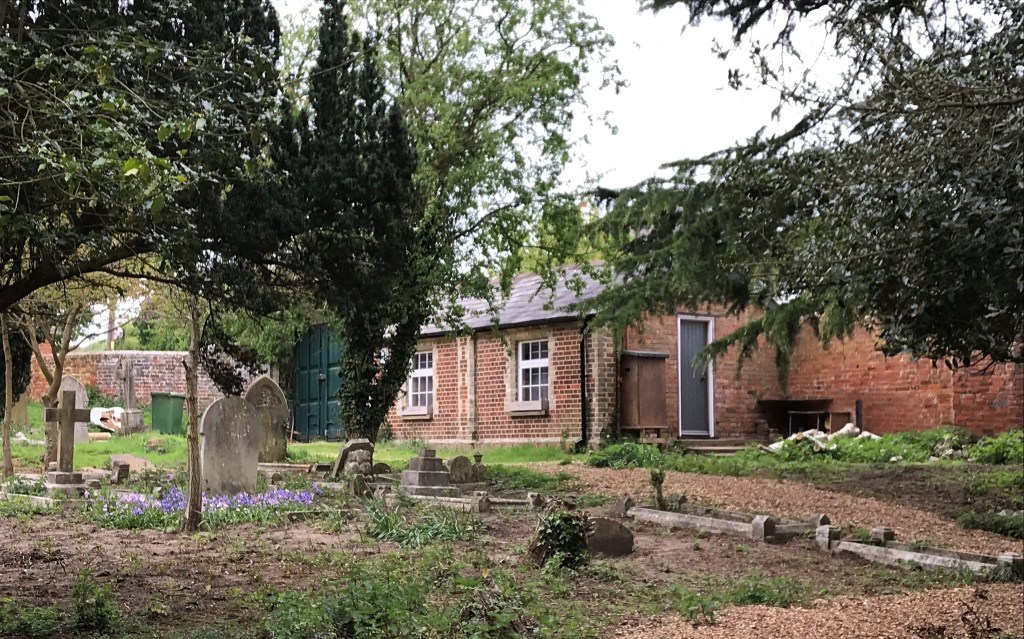
The Maldon Shed.

Maldon Cemetery was opened in 1855, a time when many municipal cemeteries were opened and the old town churchyards were closed in response to a number of Burial Acts passed from 1852 onwards. The Corporation (as it then was) would be surprised by the cemetery as it is today. It still lies outside the built-up area of the town, west of what was a railway line and is now a by-pass, but only one of its two chapels is still standing (and is still occasionally used). The other brick building in the cemetery was a mortuary, but is now a Shed; that is to say, one of the growing number of Sheds (usually Men’s, but not necessarily) that, to quote the Men’s Sheds Association, are similar to garden sheds – a place to pursue practical interests at leisure, to practice skills and enjoy making and mending. The difference is that garden sheds and their activities are often solitary in nature while Men’s Sheds are the opposite. They’re about social connections and friendship building, sharing skills and knowledge, and of course a lot of laughter.

The idea seems to have originated in Australia and Maldon’s Shed, opened in 2014, was one of the first in this country; it was set up with the support of Maldon District Council (which owns the building) and is run with the support of Maldon and District Community Voluntary Service (CVS). So successful has it been that the CVS has gone on to facilitate the Essex Shed Network, funded by the Essex Community Foundation and the Community Resilience Fund, and by the National Lottery Community Fund. There are now eighteen sheds in the county, either open or in the process of being set up.

Headstone of Maldon’s VC, Private Frederick Corbett, erected in 2004 over his previously unmarked grave. He was awarded the VC in 1883 and died in 1912.

Meanwhile, in the rest of the old cemetery, a lot of work has been done in recent years to clear undergrowth and to maintain the cemetery in a state where it can be enjoyed by visitors as well as providing a haven for wildlife. Much of this work is being done by volunteers, under the Council’s Parks and Countryside Community Officer, Sue Finch, and I was able to see them in action pulling brambles from hedges and tidying up round a pond. At the same time, on the western boundary of the modern cemetery, two Community Payback teams were working to clear an overgrown ditch.

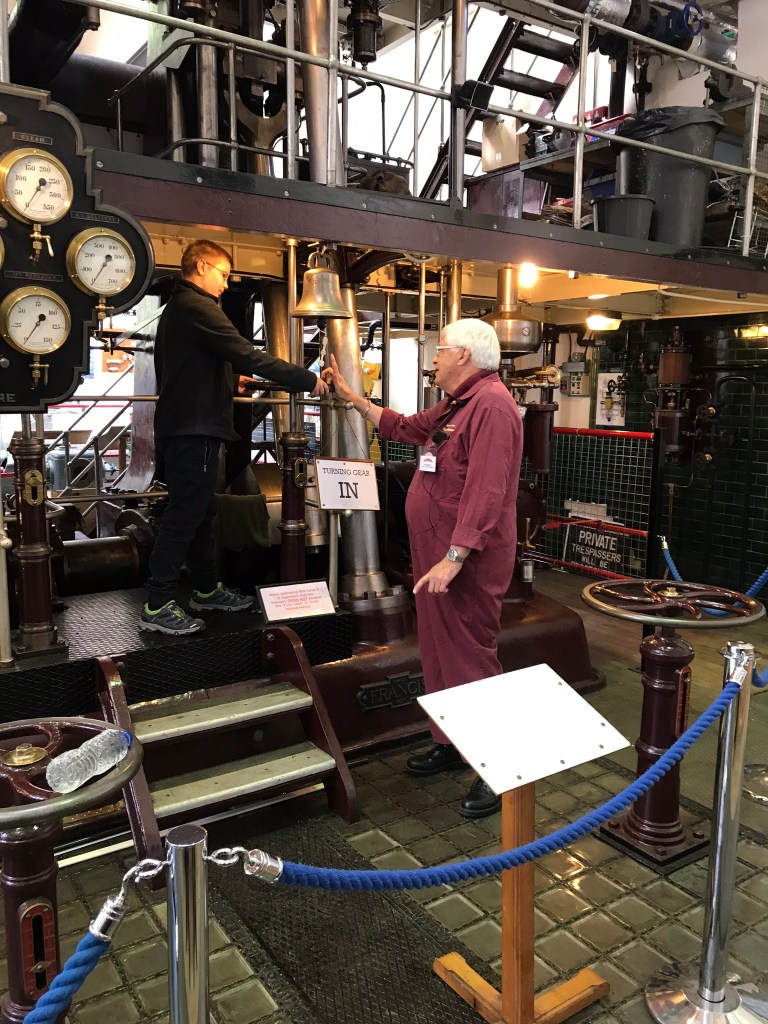
A young visitor from Germany starting up the steam pumping engine ‘Marshall’, under the watchful eye of trustee and volunteer co-ordinator Ray Anderton.

Just over a mile north of this hive of activity is another: the Museum of Power at Langford. It started life as Langford Pumping Station, completed in 1927, whose original purpose was to pump seven million gallons of drinking water every day across the county to Southend. To perform this heroic feat it was equipped with two steam-driven Lilleshall engines; a third, named Marshall, was installed in 1931, and this is the only one that survives. We saw it being run on compressed air, but on high days on holidays, or when someone is prepared to pay for the coal, it runs on steam. Around it has been collected a wondrous and varied collection of engineering artefacts, all looked after by a team of volunteers with just a single paid member of staff. It’s a wonderful place to visit, as a German family was discovering when I was there with the Chairman of Maldon District Council, Henry Bass – clearly the word is spreading.

St George’s Day in Colchester

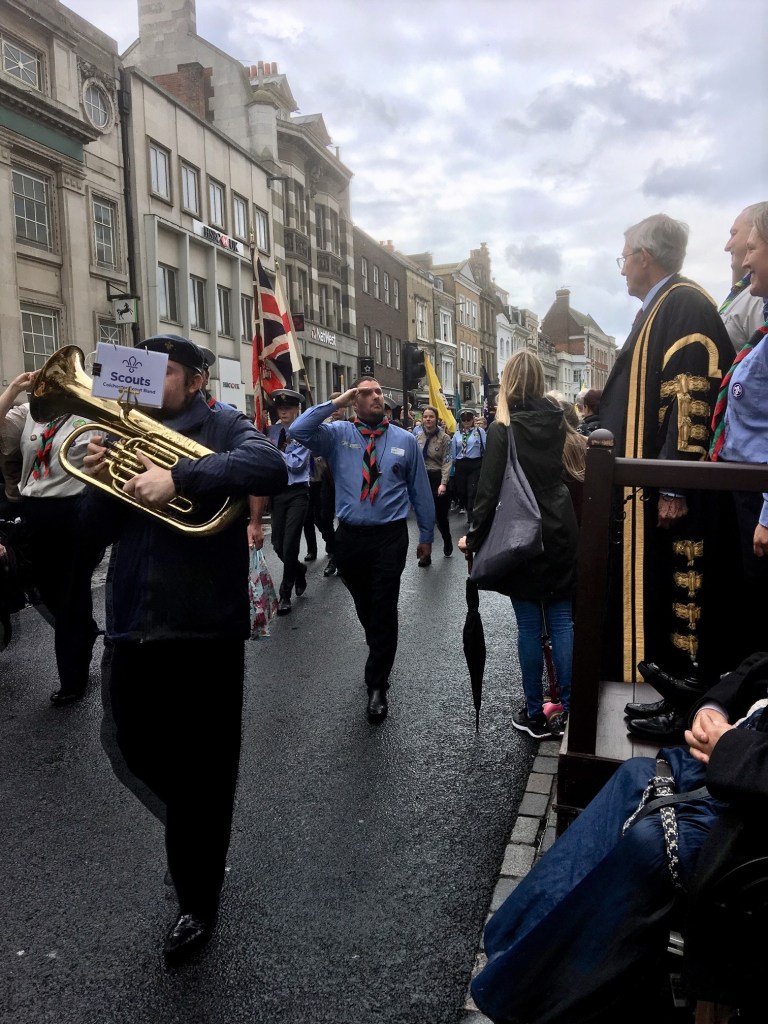
The Mayor of Colchester, Councillor Peter Chillingworth, taking the salute at the Scouts’ St George’s Day Parade

There has been some confusion this year over when to celebrate St George’s Day, much to the joy of political and theological commentators. 23 April is the normal date, but (as far as the Church of England is concerned) when a feast day falls during Easter Week, as St George’s Day did this year, it is postponed until the Monday following the First Sunday after Easter, i.e. 29 April. In Colchester, St George’s Day was celebrated this year on 28 April; that is to say, it was the day of the Civic Service for St George’s Day, and the Colchester Scouts’ St George’s Day Parade. Mercifully, as the Civic Service involved a procession from the Town Hall to St Peter’s Church, and the parade was (obviously) outside, the April showers did not do their stuff at the crucial moments, although I fear the scouts will not have escaped entirely. It was good to see so many of them marching past, in what seemed to the uninitiated a bewildering variety of uniforms.

After all that excitement, Lucy and I made our way to the Synagogue off Priory Street, where the Colchester & District Jewish Community had invited us to attend their Yom H’Shoah (Holocaust Commemoration Day) service. This was a completely new experience for us, and one that was both moving and delightful. Proceedings started with the lighting of six candles, each candle representing one million Jews lost, before the regular afternoon service, conducted mostly in Hebrew, partly sung, but with some sections in English, perhaps for the benefit of visitors like ourselves. There was then a selection of reflections and readings (in English) specifically for Yom H’Shoah. I was honoured to be asked to give one of the readings; Will Quince M.P. gave another, Celia Edey, deputising for the Lord-Lieutenant, another. There was something very simple and elegant about the service, both in the way it was conducted and in the words themselves, that added greatly to its poignancy and power. On top of that, we could not have been made to feel more welcome. This may be a small community, but it is a very vibrant one. For tea and cakes afterwards we were joined by the two Police Community Support Officers who had been assigned to keep a watchful eye over us, a reminder that the events we were commemorating have very real contemporary resonance.

What do we mean by public service?

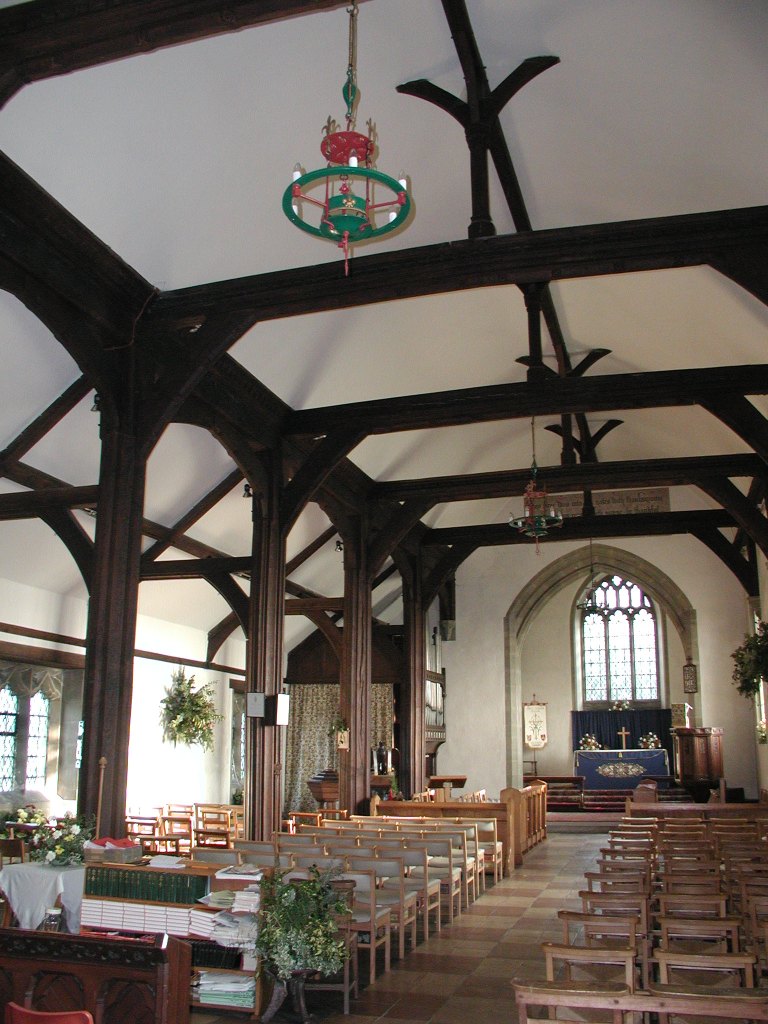
The homely interior of St Thomas’s Church, Upshire.

Public service can take many forms, as I found out one day last week when I visited Epping Forest District Council. I was a little early for my first appointment in Waltham Abbey so stopped off at St Thomas’s, Upshire, a delightful Arts and Crafts church of 1901–2 that I haven’t visited for many years. It was paid for by Sir Thomas Fowell Buxton, who was High Sheriff in 1905–6 (yet another of my predecessors it’s hard to live up to). As it happened, the church was open, because a Community Payback team were working in the churchyard, as they often do here. It’s enforced public service, to be sure, otherwise known as unpaid work, part of a community sentence, but public service nonetheless; and as well as being a punishment it benefits the church and the wider community, taking the pressure off their own volunteers and saving them the expense of hiring contractors to do the job. Nor must we forget the public service of the churchwarden who was there to open up the church, direct operations, and provide refreshments throughout the day.

Monument to Sir Thomas Fowell Buxton Bt in St Thomas’s Church, Upshire.

In Waltham Abbey, next to the new leisure centre, I saw another form of public service in operation: the District Council had organised a Community Clean Up Day, as their contribution to Keep Britain Tidy’s Great British Spring Clean. There’s an area of open grassland there between two housing estates, and dotted round the edge were the bright yellow gilets of litter-pickers; and as it was a warm sunny day, in the school holidays, lots of children were joining in with the adults. It was a good scene, with Council employees on hand to provide the necessary equipment, tackle any hazardous items that were found, and take away the rubbish afterwards.

Litter-picking in Waltham Abbey: fun for all the family.

Later in the day I visited the Jobcentre Plus at Loughton, where the regular Department of Work and Pensions staff work together with staff from the District Council to provide a service that goes way beyond what one would expect of a job centre – especially if, like me, your recent experience of such places is based on the Ken Loach film I, Daniel Blake. They do that bit extra to get people back into work or simply back on to their feet by, for example, making sure they have suitable clothes for a job interview, which seems to me to be a very good use of taxpayer’s money.

Back at home, there was a letter from the Under-Sheriff’s office with a cheque for £500 for me to send to a security guard as a reward for tackling a man who was armed with a machete and was attempting to rob a Tesco Express in Clacton. As reported in the press, the man was jailed for six years at Chelmsford Crown Court last month and the judge nominated the security guard for a High Sheriff’s Court Award in recognition of his bravery and public spiritedness. As well as receiving the cheque, he will be invited to a ceremony early next year at the Crown Court, together with other recipients of Court Awards and their families, so that we can thank them in person for what is another form of public service.

The Totham connection (i): Sir John Sammes

All Saints Church, Little Totham, Sammes monument

Great Totham cannot claim a High Sheriff as its own. The closest we can get, geographically, is Sir John Sammes, who was High Sheriff in 1606, and whose monument is in Little Totham Church. His father, also John, who had purchased the manor of Little Totham and Goldhanger in the early 1590s, lived at Langford Hall.  Young John was born in about 1576, and made a good marriage to the daughter of Sir John Garrard, a wealthy haberdasher, alderman, and Lord Mayor of London; he served as a soldier in Ireland and was knighted in 1599. He avoided being appointed sheriff in 1601, but did not escape in 1606; while in office he was fined £100 by the Court of Wards for negligence in executing process, thus demonstrating why he had previously been reluctant to serve.

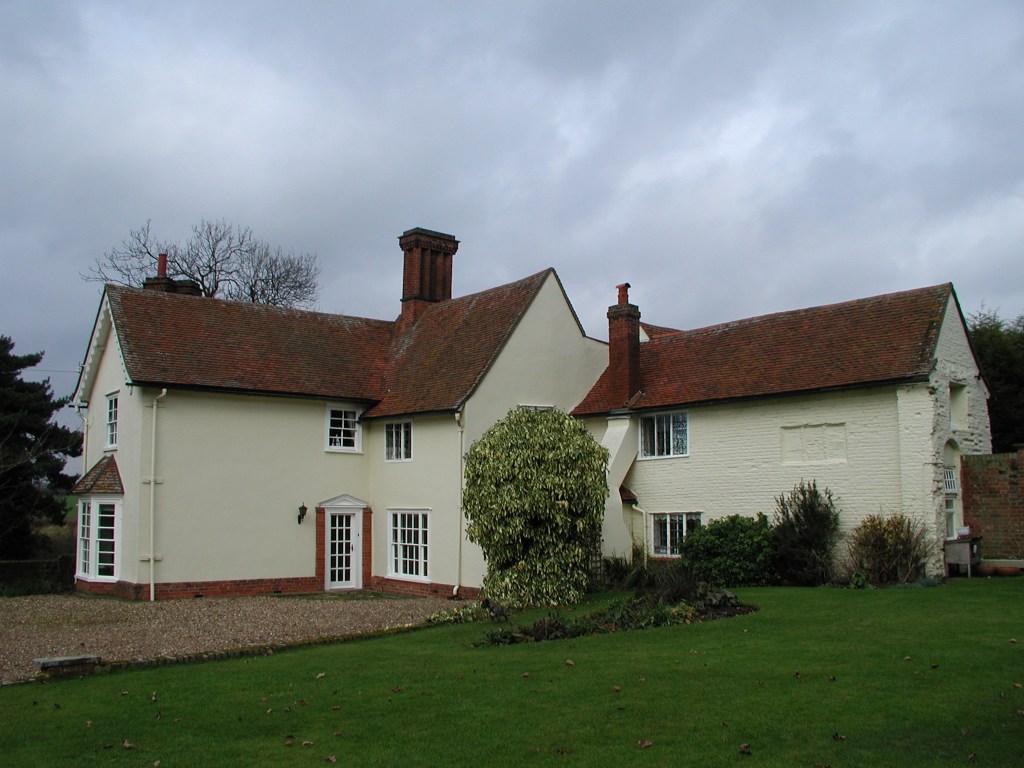
Little Totham Hall.
The painted brick range to the right is probably part of the house built by Sir John Sammes.

Sammes went on to hold many other public offices in Essex, including as a Justice of the Peace, and was elected M.P. for Maldon in 1610 and 1614 (this brief account of his life is based on the excellent History of Parliament website). At about this time he rebuilt Little Totham Hall, next to All Saints Church, of which only a fragment now remains; the expense of the house (said to have cost him about £1,400) put him badly in debt, and he fled to the United Provinces (now The Netherlands) to escape his creditors. Some time after 1625 he was appointed governor of the Dutch town of IJzendijke, where he died and was buried, but the date of his death is not known.

The monument at Little Totham, on which he appears in armour, is really the tomb of his widow Isabel, who died in 1633, and commemorates also their son Sir Garrard, who had died in 1630.

Dogs and more

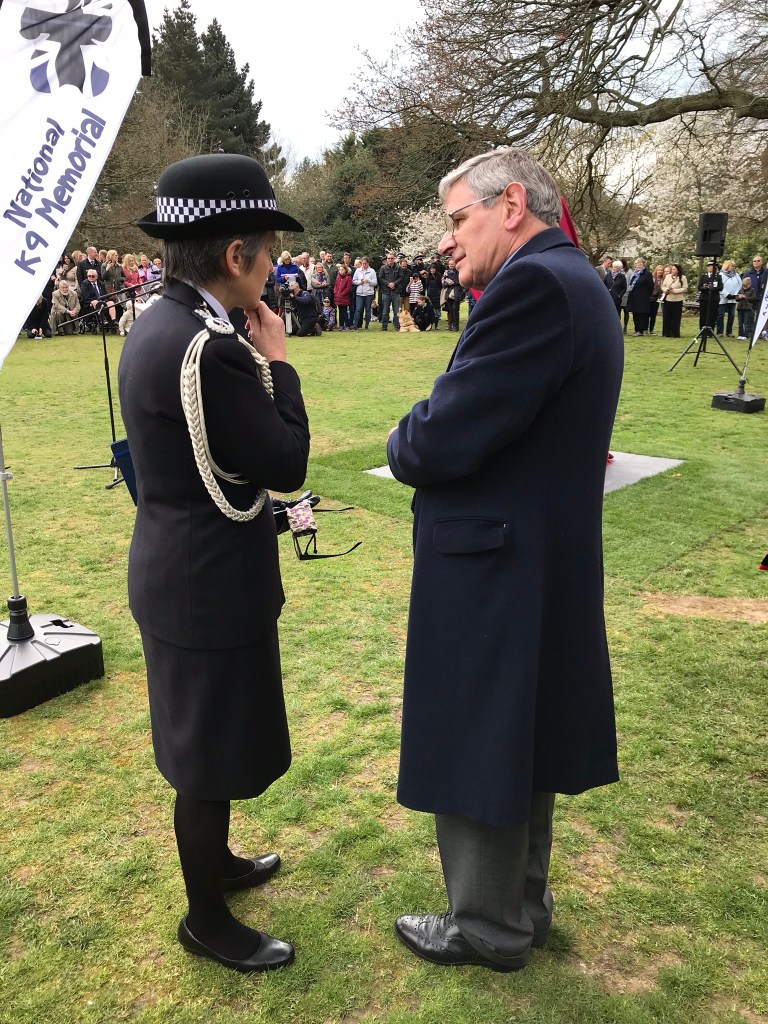
John Doubleday chatting to Cressida Dick before the unveiling.

It seems to be almost mandatory for High Sheriffs to have a dog (or two), but we are temporarily without one. However, this week more than made up for that lack, first with the unveiling on Friday 12 April of the National K9 Memorial in Oaklands Park, Chelmsford. This is a national memorial to police dogs, for which Paul Nicholls QPM, a former Essex police dog handler, has been planning and campaigning and fundraising for about thirty years. The actual memorial, a bronze statue of a handler with two dogs, is the work of Great Totham sculptor John Doubleday, and seems likely to become a firm favourite with visitors to the park, especially as it is a very child-friendly size. The memorial was blessed by the Bishop of Chelmsford and unveiled by the Metropolitan Police Commissioner Cressida Dick, in front of a crowd that included representatives of police forces (and their dogs) from across the whole country. From various speeches made, and a demonstration by Essex Police, it was interesting to learn about the contribution that dogs make to policing, often at the risk of their own lives, and to see the wonderful bond that exists between the dogs and their handlers. It is a very special relationship, not least because the handlers know they are sending their dogs into situations where they may be injured or even killed, and the dogs will defend their handlers and other officers with all that it takes.

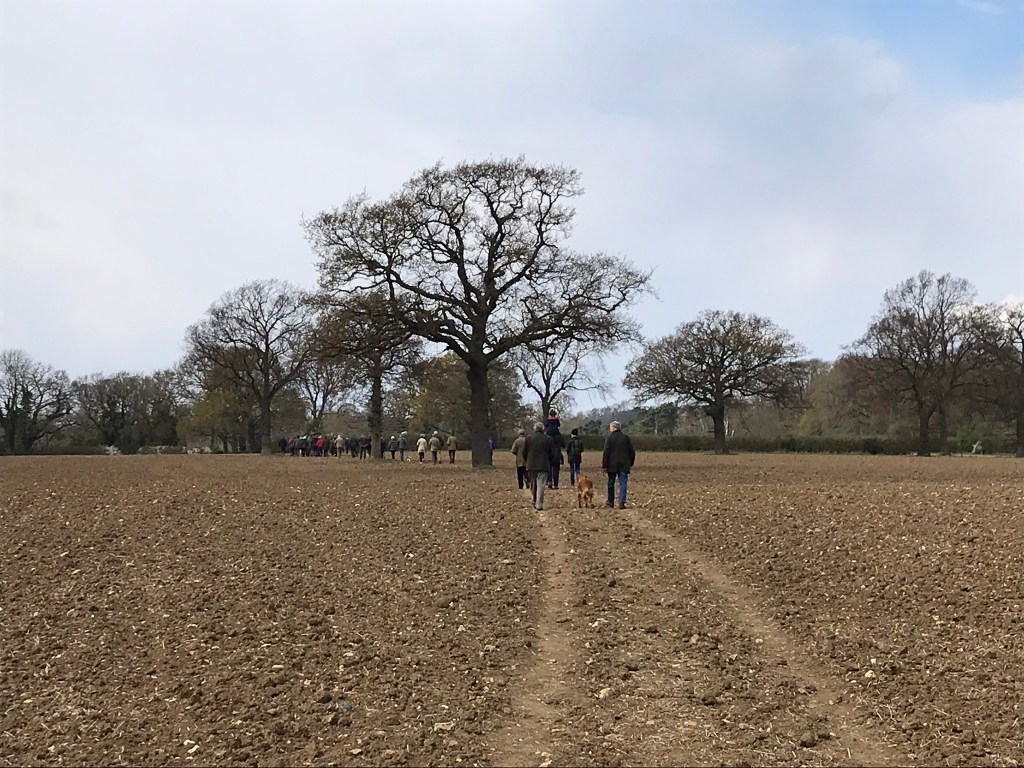
A fine bit of Essex farmland, with walkers (and dogs).

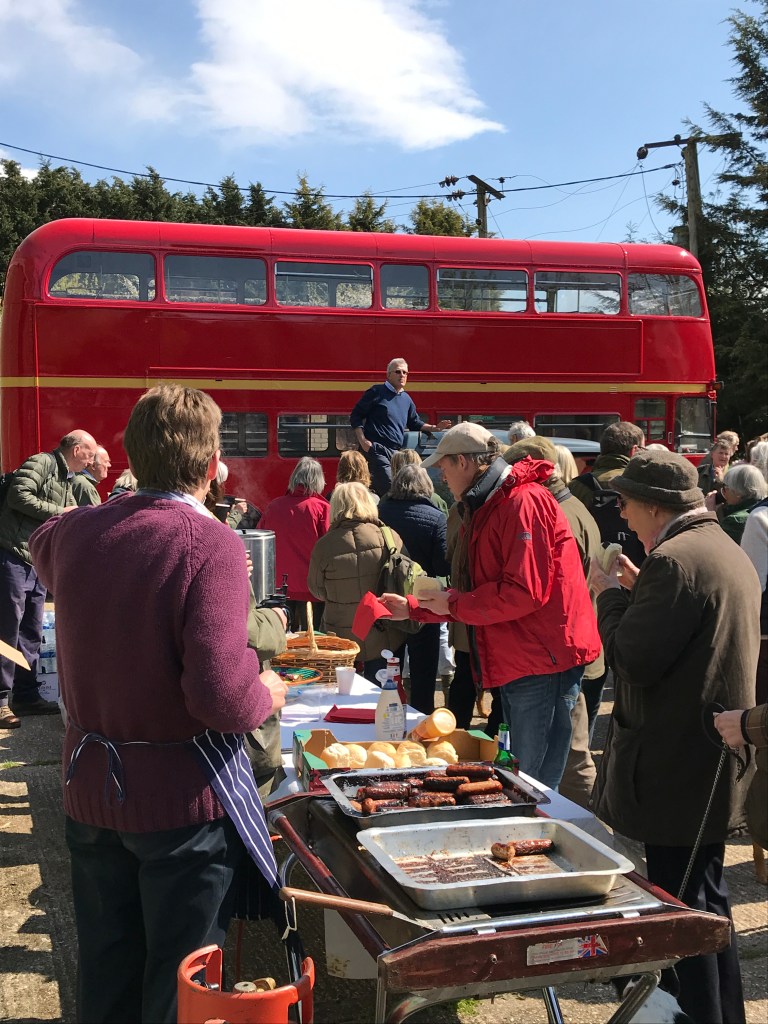
The next day found Lucy and me in the company of many more dogs, this time accompanying their owners on the annual walk that raises money for the Essex Rural Fund, under the aegis of the Rural Community Council of Essex. This well-established event is organised by David Boyle, vice president of the RCCE, who plans the route, and Nicholas Charrington, chairman of the RCCE, who ferries the walkers around in the Layer Marney Routemaster (this week, looking especially glorious having just been repainted) and organises sausages and soup for lunch. This year we started at Byham Hall, Little Maplestead, where we left our cars and were taken in the bus to Hedingham Castle. From here, after a talk on the castle from Jason Lindsay, we walked back to Byham Hall via Great Maplestead (stopping at the church to pay homage to Sir John Deane, High Sheriff 1610–11) and Little Maplestead churches. After lunch we walked to Hill Farm, Gestingthorpe, where Ashley Cooper showed us the site of the Roman villa discovered and excavated by his father, and the museum that he created in the farmhouse and outbuildings. The weather was a bit mixed (including a hail shower) but the countryside universally glorious, in a part of the county that can seem really quite remote.

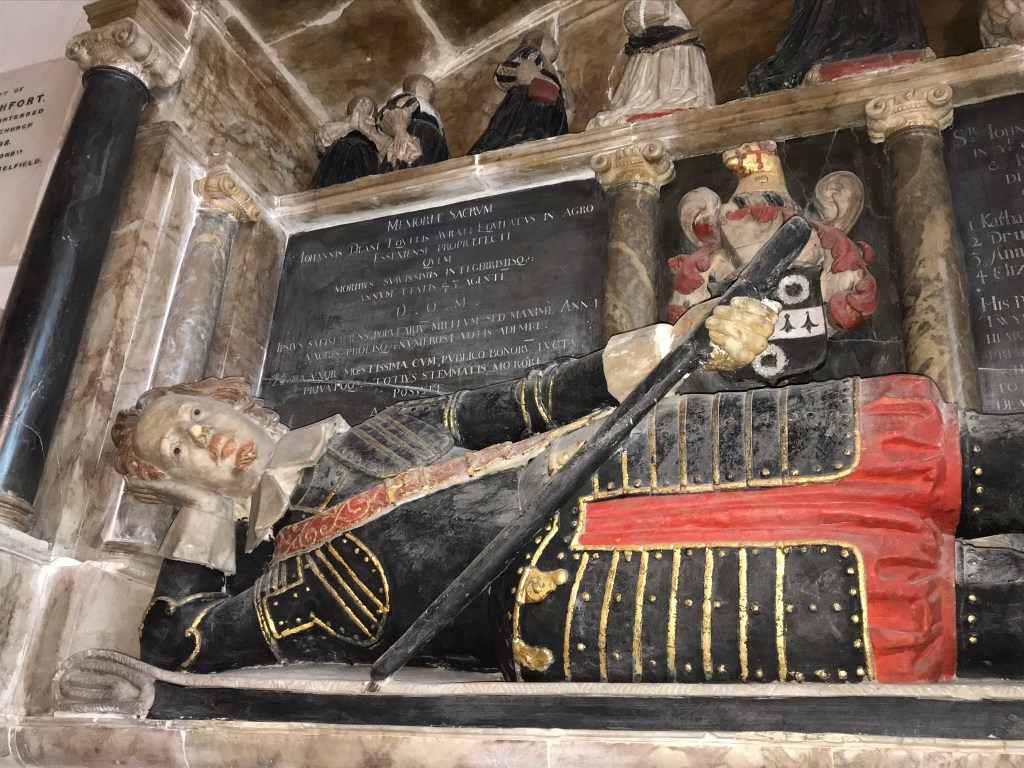
Monument in St Giles, Great Maplestead, to Sir John Deane of Dynes Hall, who was High Sheriff of Essex in 1610–11 and died in 1625/6.

Two other events this week that I was fortunate to attend highlighted the achievements of people rather than dogs. On Tuesday there was a ceremony at Chelmsford City Racecourse at which John Jowers, Chairman of the County Council, paid tribute to a diverse collection of voluntary organisations who have received grants from the County Council’s Essex Fund, administered by the Essex Community Foundation; and on Friday evening Lucy and I attended the Mayor of Chelmsford’s Community Evening at Hylands House, a reception and dinner for people nominated by Chelmsford City Councillors in recognition of their contribution to the community. It is a lovely way to show our appreciation and thank people for what they do, and Yvonne Spence, whose term of office comes to an end in a few weeks, said it was for her the highlight of the mayoral year. Both events demonstrate what an enormous part voluntary bodies play in our communities, and how much we depend on those who work so hard to keep them going.

The Declaration itself

Walter Map, a late 12th-century cleric remembered chiefly for his satirical work De nugis curialium (The trifles of courtiers), had a rather jaundiced view of the declaration made by the sheriffs when they took up their post:

Even as the children of the night – the owl, the nighthawk, and the vulture – love darkness rather than light, so from the King’s Court are sent sheriffs, under-sheriffs and beadles: men who at the outset of their office swear before the highest judge to serve honestly and faithfully God and their master, but being perverted by bribes, tear the fleeces from the lambs and leave the wolves unharmed.

The declaration made today is surprisingly similar to that sworn in the 12th century. The wording is laid down in the Sheriffs Act 1887, but much of the wording would have been familiar to sheriffs of the 15th century (with the significant exception that 19th-century sheriffs were no longer required to take ‘every care and show all diligence in destroying and causing to cease all manner of heresies and errors commonly called Lollardies’). The Act stipulates that the declaration must be made ‘before one of the judges of Her Majesty’s High Court of Justice or before a justice of the peace for the county of which he is sheriff’.

The declaration is written in language that makes it difficult to read meaningfully, and like many legal documents it is a little short on punctuation. The declaration is concerned largely with the execution of writs, and ensuring that the proceeds find their way to the Exchequer, something which no longer forms part of the High Sheriff’s duties. The emphasis is very much on safeguarding the monarch’s rights and ensuring that the sheriff does not profit personally at the monarch’s expense.

But, once the sheriff’s duty to the Crown has been firmly stated, the sheriff’s duty to the people of his county makes a crucial appearance:

I will do right as well to poor as to rich in all things belonging to my office; I will do no wrong to any man for any gift reward or promise nor for favour or hatred; I will disturb no man’s right.

Finally, he undertakes in even more general terms:

I will truly and diligently execute the good laws and statutes of this realm, and in all things well and truly behave myself in my office for the honour of the Queen and the good of her subjects, and discharge the same according to the best of my skill and power.

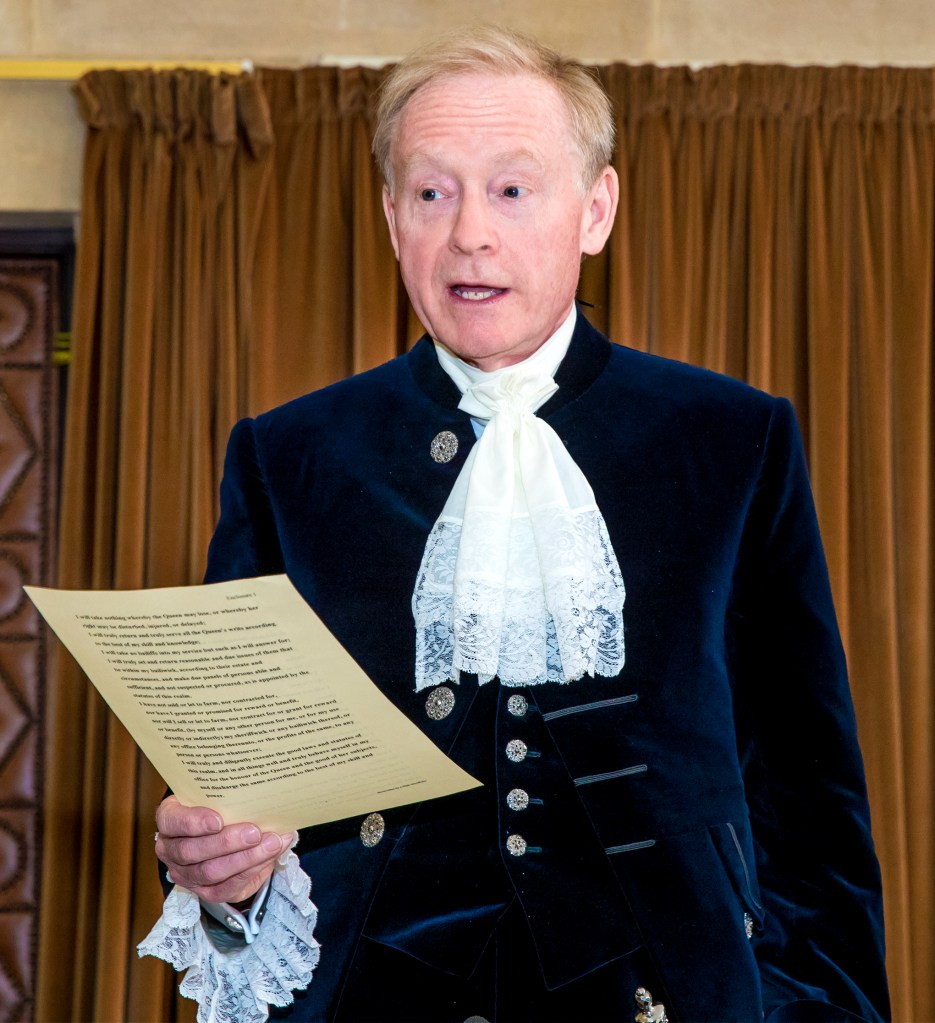
Promising to behave myself.

The modern High Sheriff has no opportunity to break most of the undertakings he gives when making his declaration, but he can certainly well and truly behave himself, and has ample opportunity to do right as well to poor as to rich by supporting those engaged in public service and voluntary work in his county.

[For the history of the declaration, see Irene Gladwin, The Sheriff: the man and his office (1974), pp. 163, 259–60, 373–4. Walter Map is quoted in Helen Cam, The Hundred and the Hundred Rolls: an outline of local government in medieval England (1930), p. 59.]

The Declaration Ceremony


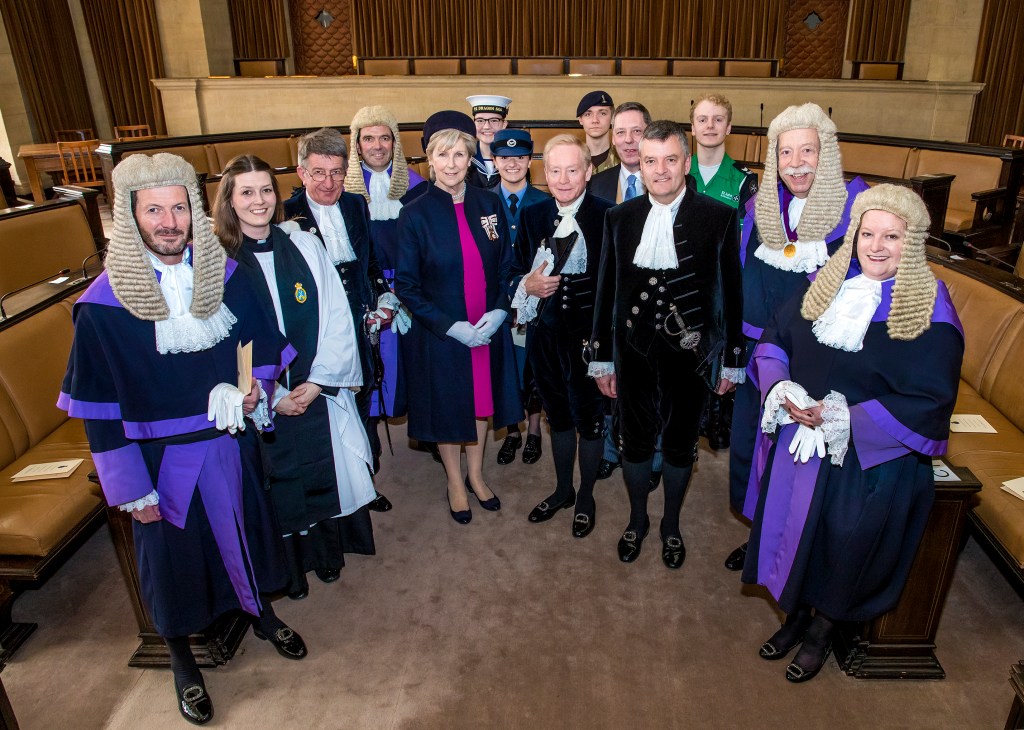
From left to right: HHJ Seely, the Revd Faye Bailey, Roger Brice (Under-Sheriff), HHJ Lodge, HM Lord-Lieutenant of Essex, James Bettley, Martin Stuchfield, Bryan Burrough, HHJ Gratwicke, HHJ Leigh, and four Lord-Lieutenant’s Cadets.

The High Sheriff is appointed when The Queen pricks his or her name in a meeting of the Privy Council – in my case, on 13 March.  But he does not actually assume office until he makes his Declaration. The only stipulation is that this must be before a High Court judge or a magistrate. It can be done anywhere and no one else need be present, so it would be perfectly possible to do it in your kitchen at home, but for those who enjoy a bit of ceremonial that would be missing a good opportunity.

Sheriffs Act 1887

In the distant past the Declaration no doubt was made in the incoming High Sheriff’s residence. In the 20th century the ceremony seems to have normally taken place at the Under-Sheriff’s office, when it must have been a relatively modest occasion. More recently, one or other of the courts in Chelmsford has been used, but since 2015, when Vincent Thompson made his Declaration, the venue has been the Council Chamber at County Hall.

The Council Chamber, County Hall, Chelmsford

The Council Chamber provides a very fitting setting for a County event. It was opened in 1938, part of extensions to County Hall designed by the County Architect, John Stuart, with the national expert for such buildings, E. Vincent Harris, brought in to design the important ceremonial rooms. What makes the Council Chamber special are the decorations, paid for by Councillor W. J. Courtauld (High Sheriff 1921–22). These include two large maps of the county (in 1576 and 1938), and portraits of famous Essex men and women, all painted by Henry Rushbury. Others commemorated on the walls and in stained glass include former High Sheriffs Sir Anthony Cooke of Gidea Hall (1544–45), Edward North Buxton (1888–89), and Andrew Johnston (1880–81, and first chairman of Essex County Council 1889–1916).

The Order of the Ceremony is that that the Lord-Lieutenant opens the proceedings and orders the reading of the Royal Warrant appointing the incoming High Sheriff. This is done by the Under-Sheriff. The incoming High Sheriff makes his Declaration, and the outgoing High Sheriff reports on his year of Office. He then presents the Staff of Office to his successor (who is by now no longer incoming, but in office), who appoints his Under-Sheriff. The High Sheriff may of course appoint whomsoever he wishes to the post, but it would be a brave High Sheriff who did not re-appoint the existing Under-Sheriff, whose knowledge and experience is invaluable. The Under-Sheriff in turn makes his Declaration, which is very similar to the High Sheriff’s. The High Sheriff appoints his Chaplain, who reads a prayer. The Lord-Lieutenant then closes the ceremony.

On Monday 8 April I did of course re-appoint Roger Brice as my Under-Sheriff, and as my Chaplain I appointed the Revd Faye Bailey, who until recently was Assistant Curate at The Ascension with All Saints, Chelmsford, but on 28 March was installed as Team Rector of the parish of Becontree South. The attesting magistrate was my colleague Martin Stuchfield, and the line-up on the bench included four circuit judges: Their Honours Charles Gratwicke (Honorary Recorder of Chelmsford), John Lodge, Jonathan Seely, and Samantha Leigh. The meat of the ceremony is the outgoing High Sheriff’s report, and Bryan Burrough delivered a well-balanced reminder to those present of all the good things that are being done in the County to improve the lot of its residents, and of the things that still need to be done. Without those who work in the public service, whether paid or as volunteers, society as we know it and perhaps take for granted simply could not continue to function, and it is one of the High Sheriff’s most important roles to see that they receive recognition and our gratitude.

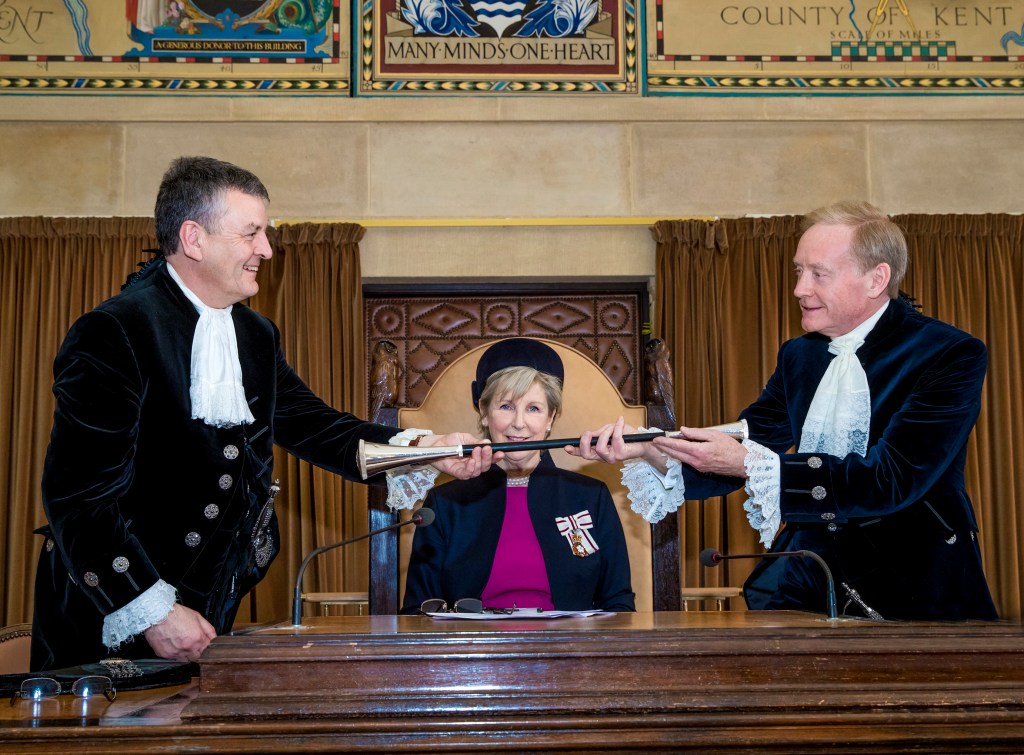
Passing the baton…

How many High Sheriffs of Essex have there been?

839? Or 830? Or, perhaps, 802? It all depends what and how you count.

Officially, I am the 839th High Sheriff. This is based on R. B. Colvin’s The Lieutenants and Keepers of the Rolls of the County of Essex (1934), which included a list of sheriffs up to 1933. The names of those who have held office since 1900, supplied by the office of the Under-Sheriff, can be found on the website of the High Sheriffs’ Association.

Colvin’s list for the years up to and including 1832 was taken from the List of Sheriffs for England and Wales from the earliest times to A.D. 1831, published by the Public Record Office in 1898, which can for the most part be considered definitive: more reliable, for example, than the list to be found in Philip Morant’s History and Antiquities of the County of Essex, which goes up to 1768. However, the PRO list includes fifteen names between 1191 and 1224 that ‘are those of Under-Sheriffs, or others who rendered Sheriffs’ accounts at the Exchequer, widows and executors excluded.’ They should not, therefore, be included in the total number of sheriffs.

On the other hand, the PRO list was only as good as the known sources available at the time, and further research has since been carried out by Judith A. Green into the early years of the shrievalty, up to 1155, after which there are reliable and near-continuous records in one form or another. Her research was published in 1990 under the title English Sheriffs to 1154 as a supplement to the PRO list. The PRO listed seven sheriffs of Essex for the period in question; Professor Green was able to raise the total to fourteen (one identified only by the initial ‘N’), as well as a possible seven others – but we had better leave those out of our calculations.

A recount of the names in the PRO list, less the names of under-sheriffs etc., plus the additional sheriffs identified by Professor Green, gives a total of 642 sheriffs up to 1832. Add the names of those who have held office since 1833, and the total comes to 830 (including the present incumbent).

But – and this is a story full of buts – the PRO list includes a number of sheriffs who were appointed but did not serve. Thus we find that in 1702 Robert Breedon was appointed on 1 January, Thomas Webster on 12 January, and Peter Whitcombe of Great Braxted on 19 January. This accounts for three entries in the PRO list, but as Breedon and Webster were immediately replaced they should not count towards the total number of those who actually held office.

All Saints, Great Braxted. Peter Whitcombe was Lord of the Manor from 1692 until his death in 1704; Morant describes him as a ‘Turkey-merchant’, meaning that he traded at Constantinople rather than sold turkeys

The situation is further complicated by the fact that in the Middle Ages a number of sheriffs served more than one separate term. Before 1258, there was no limit on the time a sheriff might remain in office: in 1204 Matthew Mantel and his heirs were appointed sheriff of Essex and Hertfordshire in perpetuity, although in fact he seems to have thought better of it and held office for only three and a half years.  It is not always immediately apparent that the same person was appointed on separate occasions, because their names are given differently: Nicholas Clericus, appointed in 1168, is presumably the same as Nicholas Decanus, appointed in 1164, apparently the only example of an Essex sheriff who was in Holy Orders.

Even after the reforms introduced in 1258 theoretically limited sheriffs to a single, twelve-month term of office: Sir John de Coggeshall, for example, served in 1334–9, 1343–8, and 1351–4.  Sir Henry Tey served in 1488–9 and 1500–01, Sir John Wentworth in 1543–4 and 1553–4, and Sir Arthur Harris in 1573–4 and 1586–7. Theoretically this is still possible: the Sheriffs Act 1887 allows for reappointment after a gap of three years, but sooner if ‘there is no other person in the county qualified to fill the office’.

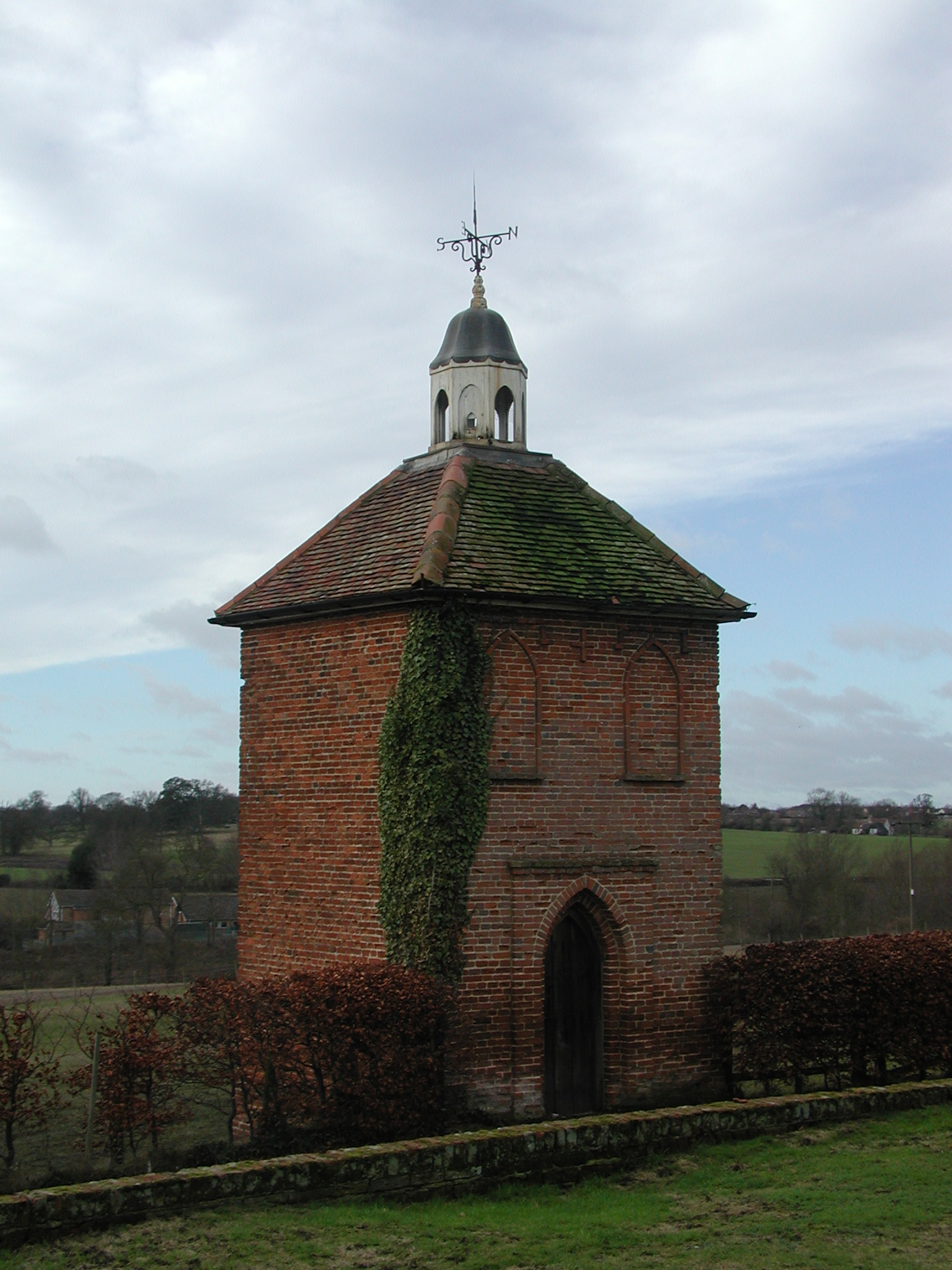
The 18th-century dovecote at Great Codham Hall. The house itself dates back to the 14th century, probably built by Sir John de Coggeshall who died in 1361.

With all these variables, it might seem impossible to arrive at a definitive figure, and the question with which we started perhaps needs to be framed more precisely as ‘how many people have served as High Sheriff of Essex?’, counting those who served more than one term, consecutively or not, only once; not including those were appointed, but did not actually serve; but not forgetting those who replaced sheriffs in mid-term, usually as a result of death in office (or, in the case of poor John Bayard in 1256, ‘became a lunatic’). This gives a total of 802 individuals, although even so there may be some double counting of sheriffs in the Middle Ages who had the same name but were sufficiently far apart in the list to suggest that they were not the same person.

By my reckoning (and I’d welcome comments and corrections) that makes me either the 830th, or the 802nd, High Sheriff of Essex.