More children, some animals

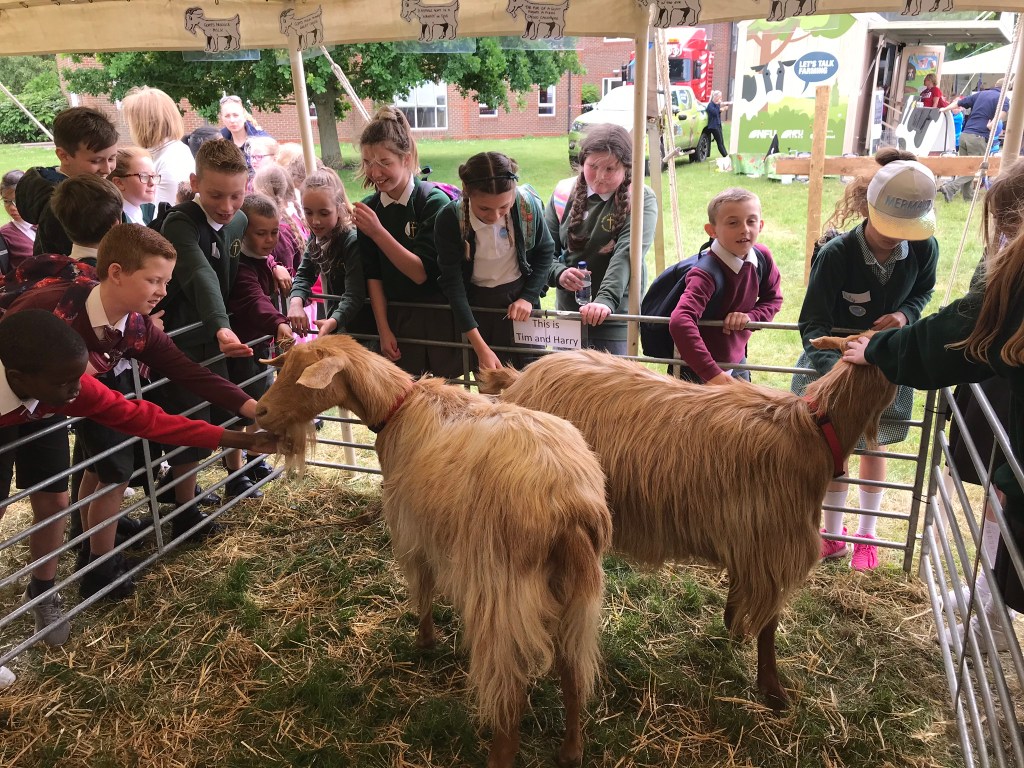
Essex Schools Food and Farming Day, now in its twelfth year, is an event organised by the Essex Agricultural Society in partnership with Writtle University College and Essex County Council. This year it saw some 3000 primary school children from all over Essex gathered in the showground at Writtle, where they were exposed to a variety of stands and displays that told them about all aspects of food and farming. The idea is to show them that cornflakes are made from maize, which has to be grown in a field, and that milk comes from cows before it gets into a bottle or, more likely, a plastic carton.

In this it works magnificently, and the children, aged 8 to 11, were clearly enjoying a grand day out. Displays of raw cereals proved surprisingly popular. People dressed as tomatoes and cucumbers were mobbed. And Tim and Harry, the well-groomed Golden Guernsey goats, patiently received a lot of attention, but such handsome creatures are no doubt used to it.

What was noticeable was that the farm machinery, once so popular with small boys (and of course girls), failed to grab their attention. They were much more interested in making pyjamas from bananas, and other eco-friendly ways of turning what would otherwise be plant waste into something useful, or saving water. They seemed less than impressed by a big piece of kit that was used to spray the fields with chemicals, essential though they are if a growing population is to be fed with the food that it needs and especially the meat which the majority crave.

The children may not have been avoiding from the stalls offering samples of venison burgers and pork products – on the contrary – but there is no doubt that as a generation they are more conscious of the environment than the majority of their elders.

That same evening, as the sunshine was turning to light rain, we drove down to Hawkwell to meet the 4th Rochford Scouts, for a litter-pick that had been organised by Rochford District Councillor Julie Gooding. Our hunting ground was a large playing field behind Clements Hall Leisure Centre, and at first sight it wasn’t very promising, as there wasn’t much sign of litter; but the long grass and scrub round the edge yielded rich pickings, much of it recyclable. It was fun, and there was some friendly competition, but the scouts were fully aware of the environmental value of what they were doing, and of the long-term damage that discarded plastic is doing as well as the immediate damage caused by broken glass. I wasn’t surprised to learn that one of the young leaders, currently doing her GCSEs, wants to be a marine biologist.
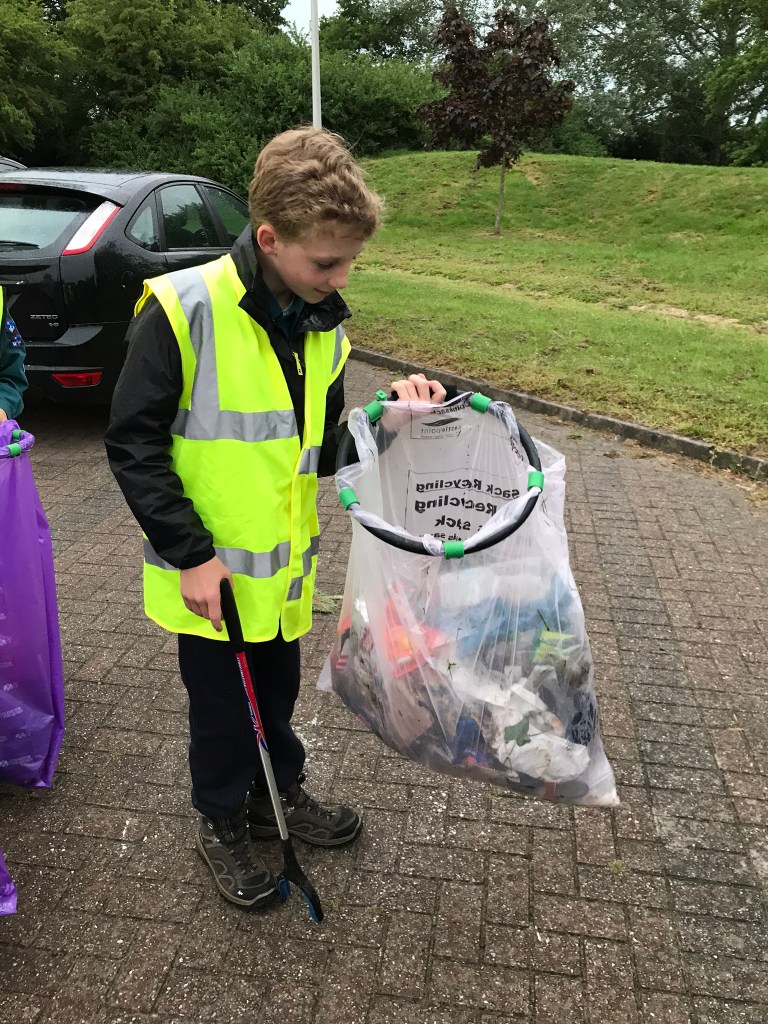
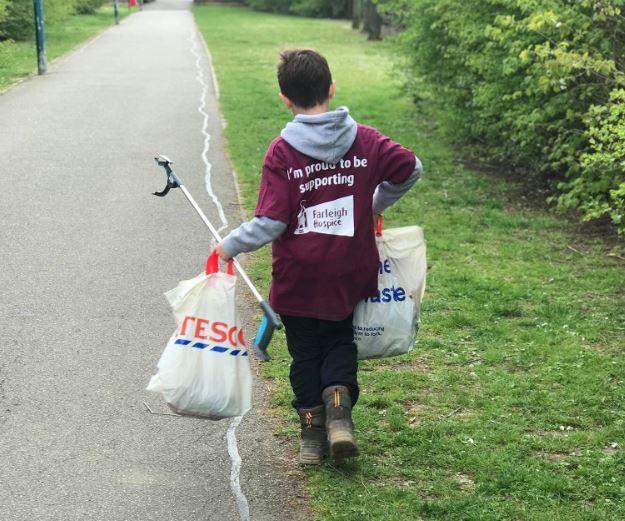
I hope it’s not too grasping to mention at this stage that I’m raising money for the High Sheriffs’ Fund by taking part in litter picks across the county during my year in office. But I need to take every opportunity, because I fear that my efforts are likely to be eclipsed by 7-year-old Daniel Walker, who has so far raised £2800 for Farleigh Hospice by litter-picking in Great Notley. This week he walked away with the ‘Inspirational Role Model’ award (young person winner) at the Braintree District Volunteer Awards, well-deserved recognition of his efforts.

Daniel Walker receiving his award from the Chairman of Braintree District Council, Councillor Angela Kilmartin, and the High Sheriff

Dorothy Lodge, with whom (as it happens) I used to sit as a magistrate, was the adult winner, and overall Volunteer of the Year; but, particularly when it comes to the environment, the Daniel Walkers of this world can provide as much inspiration as the David Attenboroughs.
With apologies to the Braintree & Witham Times.

Stronger together

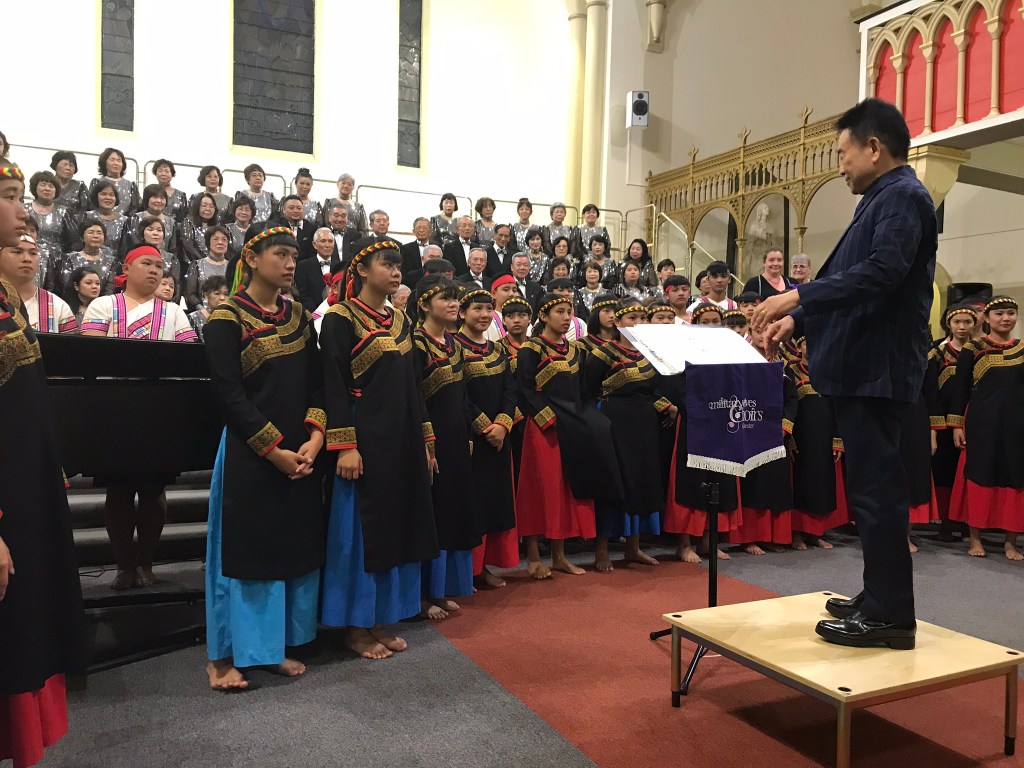
Life is full of surprises these days, and ‘A Night of Music’ held in St Botolph’s Church, Colchester, contained more than its fair share. The first was the Amici Mixed Choir from Okinawa, Japan – about ninety of them, with an average age of 77 – singing ‘Home, Sweet Home’ in Japanese, accompanied on grand piano. Their repertoire also included Handel, Mascagni (Cavelleria Rusticana), and a Hokkaido folksong. The came all the way from Okinawa for this one concert and, apart from a little sightseeing, are heading straight back. The standard of their performance was second to none.

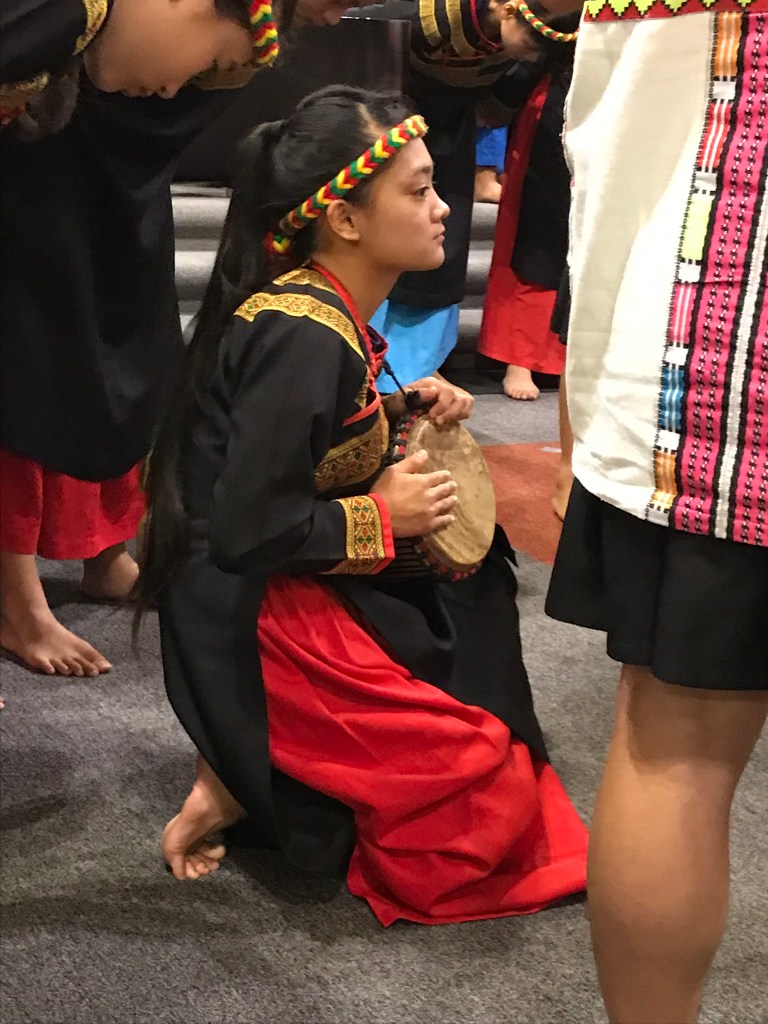
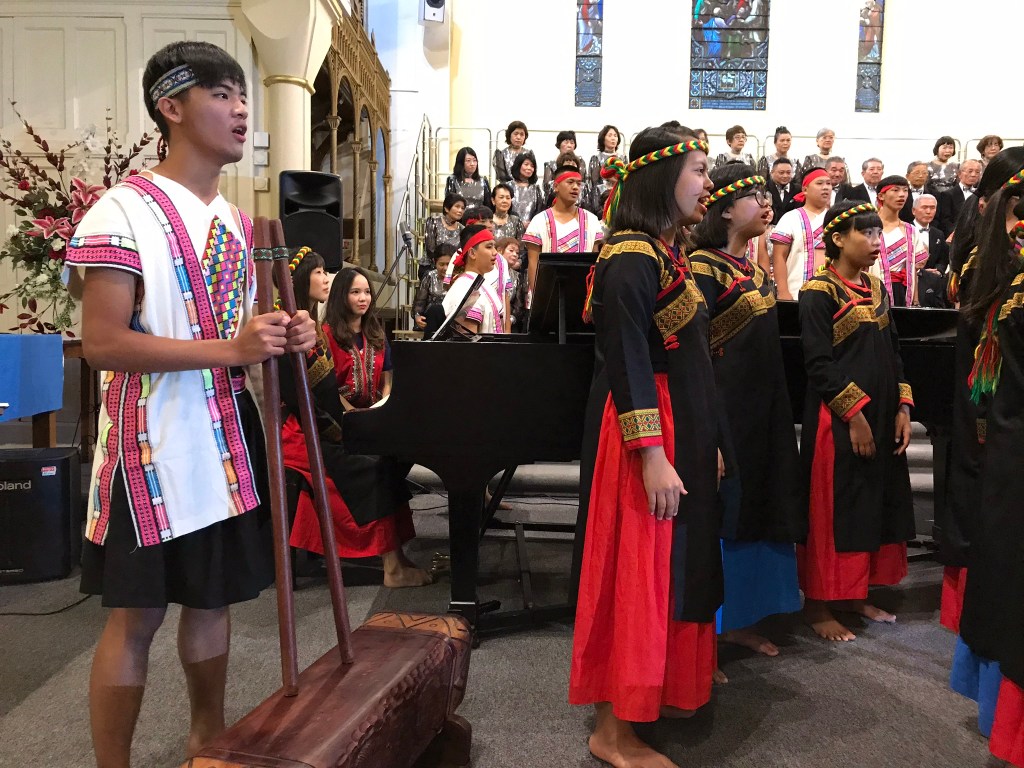
Meanwhile we had been eagerly awaiting the Bao-Lai Junior High School Chorus, sitting patiently in the north aisle in their traditional costume. They swept on like a tropical storm, dancing and singing, some as young as 11. It was exhilarating stuff, totally unfamiliar traditional songs, for the most part wild and energetic but with one breath-taking passage of delicate whistling birdsong. They have won many international prizes since they were founded in 2015, and it is not hard to see why. They come from a district in southern Taiwan where the majority of the population is composed of the indigenous Bunun ethnic group, one of sixteen official aboriginal groups in Taiwan; our neighbour, the Deputy Representative of the Taipei Representative Office in London, said he did not understand their language, but he did not need to (and neither did we) to appreciate their performance.

Click here to see what happened next

These two very different choirs came to Colchester thanks to the Colchester Military Wives Choir, who have achieved a formidable reputation themselves in the seven years of their existence. They are part of a growing network of military wives choirs across the forces, made up of veterans, mothers of soldiers and, of course, military wives. The benefits they bring in terms of boosting morale and building community spirit are enormous, and they have performed for many charities as well.

Click here for the video

It is easy to slip into clichés and draw predictable morals from events such as these. Music transcends cultural and political barriers. The two visiting choirs achieved more in the course of the evening than a month of trade talks ever could, and it was more than politeness towards our overseas guests that brought the audience to its feet for two standing ovations. The final pieces were especially poignant and symbolic. First, the Military Wives singing ‘We Will Remember Them’, followed by ‘Stronger Together’, the theme song (by Gareth Malone) of the military wives movement; then all three choirs singing together ‘Amazing Grace’.

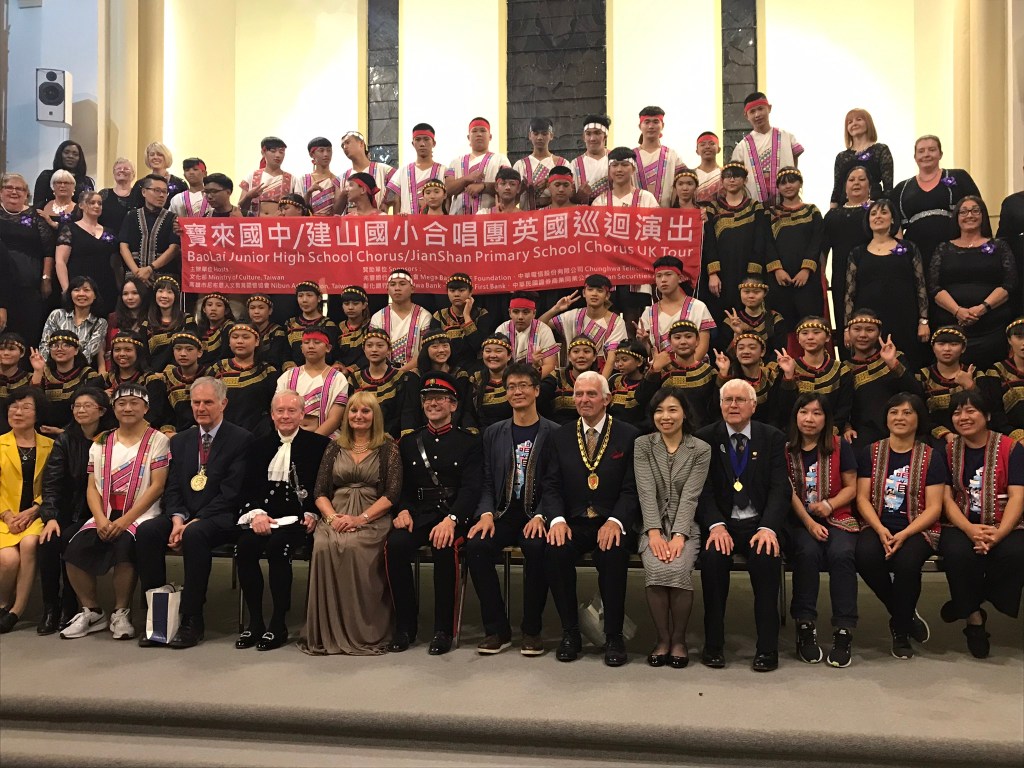
The Bao-Lai Junior High School Chorus, with members of the Colchester Military Wives Choir, and (left to right) the Mayor of Colchester. the High Sheriff, Nicholas Charrington DL, the Chairman of Essex County Council, the First Secretary of the Japanese Embassy, and the High Steward of Colchester.

After that, all descended into near chaos with group photos on the staging. The traditionally-costumed Taiwanese turned out to have jeans under their robes, and quickly found their trainers. Getting them into the right place, to the satisfaction of the photographer, required much arm waving. A small party of elderly Japanese men made light work of pushing the grand piano out of the way. Gifts were distributed, including bags of goodies from Okinawa containing origami birds and boxes of what look like biscuits, and from Colchester intriguing parcels of fudge and little jars Tiptree honey. I would guess that everyone left feeling a lot better about the world than when they arrived.

The Amici Mixed Choir, with Colchester Military Wives Choir in the front, and assorted dignitaries (as above).

Working with animals and children

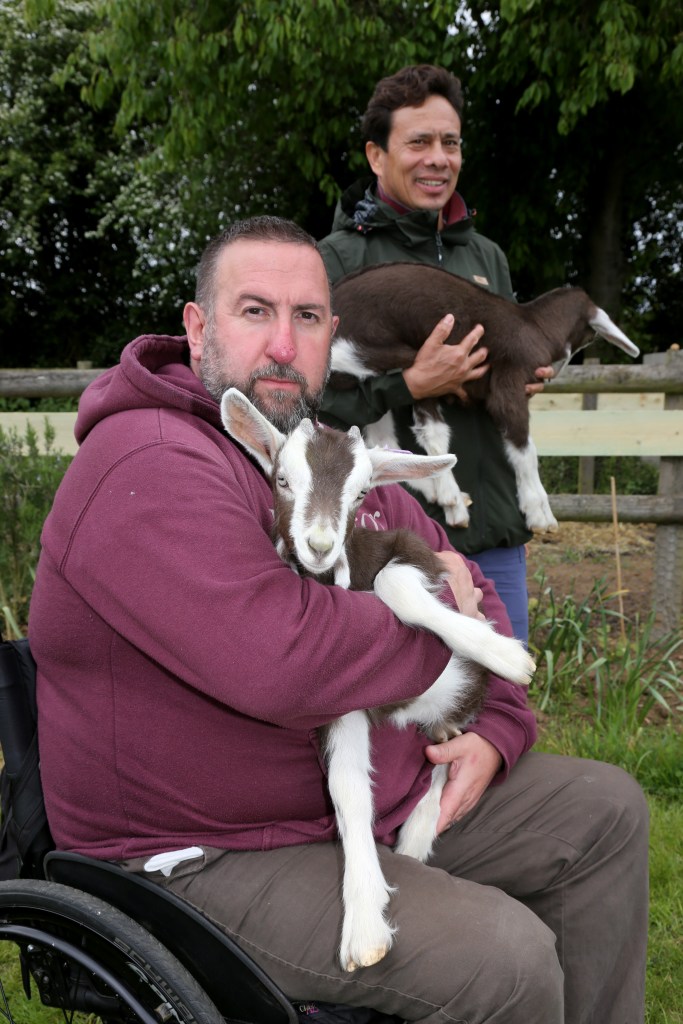
Never do it, said W. C. Fields (supposedly – don’t write in), but then being High Sheriff has little to do with show business, apart from the occasional dressing up. There’s quite a lot that can go wrong with holding a goat, but this particular one was very well behaved and presumably used to being handled by strangers, and I was appropriately dressed in tweed rather than velvet. I didn’t catch its name, but it was one of two that we met at Abberton Rural Training in Wormingford, along with ART’s CEO, Jacqui Stone, chairman Paul Roberts, and a number of trustees (see photo above). ART was established 2014 following a Section 106 requirement as part of the extension to the Abberton Reservoir (hence the name), and moved a couple of years ago to occupy the old village school at Wormingford, down a very narrow lane by the church in one of the most rural parts of North Essex, on the slope that leads down to the River Stour and Suffolk. Here a wide variety of people with a range of issues are helped back into the community: in ART’s words, they run courses in rural skills for the ‘long-term unemployed, those with barriers, and wounded and injured service personnel and veterans’. The goats have their part to play in this process (see photo below), working alongside a dedicated management team and number of part-time tutors.

The goats were a one-off. The children (no ‘kids’ puns, please) were equally well behaved, and there were three lots of them. The first appeared at the Essex Community Foundation’s reception at Layer Marney Tower: a group of six from All Saints’ Primary School, Maldon, where the imaginative head, Philip Brown, has come up with a scheme called Maldon Up whereby children in Year 6 make weekly visits to Longfield Care Home in the town, talking to them and playing games, to the great benefit of both children and residents. It’s an initiative that should be widely copied. Mr Brown runs what seems to be the very best sort of old-fashioned village school, in that he went there himself and has sent his children there too; and he cheerfully admits that much of the burden of delivering his wilder schemes falls on the shoulders of his deputy, Mrs White.

Year 6 students from All Saints’ School, Maldon, with Mrs White (left), Mr Brown (right), and Nick Alston, chairman of the Essex Community Foundation
(Essex CF Pics)

The next lot we encountered came from a wide geographical area (including Surrey, Buckinghamshire and Suffolk) and were taking part in the regional finals of the Magistrates’ Court Mock Trial competition. This is organised by Young Citizens for 12–14 year olds; there’s a separate Crown Court-style competition for 15–18 year olds. After what must be a great deal of preparation (with some input from magistrate mentors) the children stage a trial, taking all the parts (magistrates, legal adviser, usher, lawyers, defendant, witnesses) with just a single real magistrate acting as chairman, and more magistrates judging their performance. It is all surprisingly true to life, although it must be said that the acquittal of the defendant in the two cases we watched (assault of a taxi driver) came as a bit of a surprise. But it’s the process, rather than the outcome, that’s being judged. The winners, Sir John Hampden Grammar School from High Wycombe, go through to the national finals at the Royal Courts of Justice in June. What an amazing experience that will be for them! As for the runners-up, they have had the experience of spending half a day in Chelmsford Crown Court, and will have learnt a lot about what goes on in the magistrates’ courts, where all criminal cases start and where 95 per cent are concluded – an aspect of the criminal justice system that is rarely understood except by those directly involved in it. So much work goes into the mock trials, on the part of the students, their teachers, magistrates and court staff, and Young Citizens, but it is time well spent.

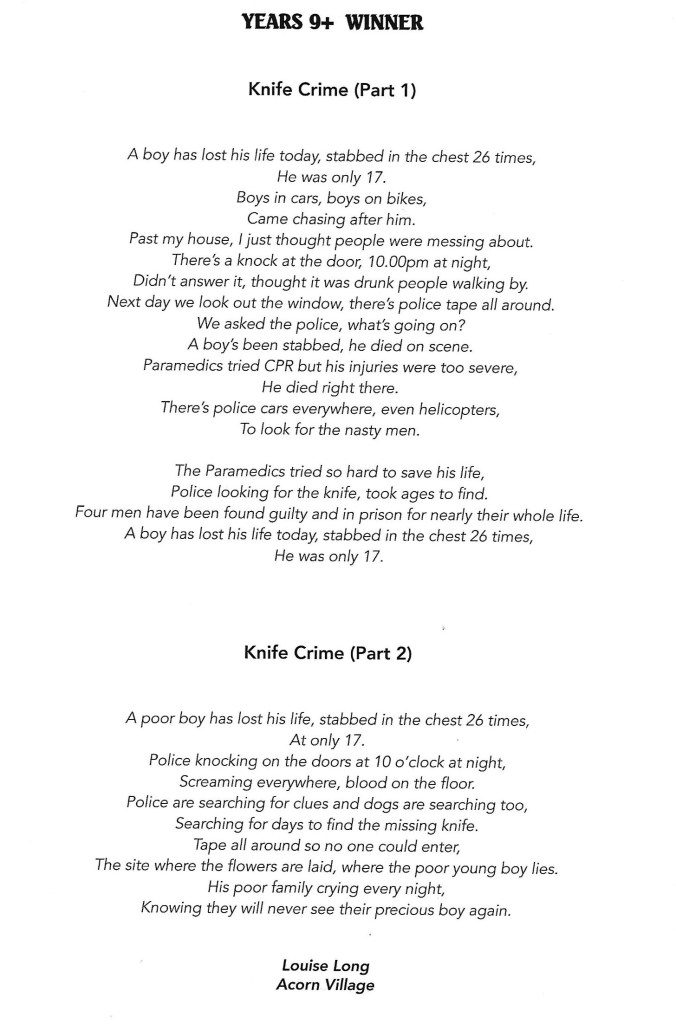
From the Rhyme v Crime anthology, illustrated by artists from the amazing Acorn Village, Mistley

Finally, to Harwich, to help present prizes to winners in a ‘Rhyme against Crime’ competition organised by the Harwich and District Community Crime Prevention Panel – a competition run within local schools to highlight crime-related issues and allow the children themselves to express an opinion about them in verse. On reflection I was wrong in what I said earlier about the High Sheriff having little to do with show business: this was an evening of razzamatazz, compered by Nigel Spencer MBE DL, chairman of the HDCCPP, and it included not just the prizewinners and runners-up reading their poems, but very enjoyable and accomplished musical interludes by Harwich Sing (community choir), Nicole Dube and Freya Potticary, and Harwich Rock School. The themes that the children chose for their verses were varied, but all seemed deeply felt and there was a sense of outrage that their elders and not betters are behaving in ways that makes life a misery for other people. Leading themes were graffiti and other antisocial behaviour, cyber bullying, and (among the older ones especially) knife crime:

Artist Louise; she’s a member of Harwich Sing, too.

The Totham connection (ii): W. P. Honywood

W. P. Honywood, by Robert Nightingale of Maldon
(Colchester and Ipswich Museum Service: Colchester Collection)

Great Totham has a rather better claim, as it were by proxy, to William Philip Honywood of Marks Hall, who was High Sheriff in 1851. He was the second member of his family to hold the office, but the example of his predecessor, John Lamotte Honywood, sheriff in 1689–90, is not particularly inspiring: he hanged himself in 1694. At that time he was M.P. for Essex, having previously been elected in 1679 and 1681.

For almost all of the 19th century the Honywood family were lords of the manor of Great Totham, lay rectors of the parish, and the principal landowner – in fact they owned almost the entire village, having purchased the manor of Jepcracks in 1749 and Great Totham Hall in 1765. The estates passed through several branches of the family over the years (and now I’m quoting from my own guide to St Peter’s Church), but those who took more interest in Great Totham than might be expected, considering that they lived a good ten miles away, were Filmer Honywood (who sponsored the enclosure of the parish in 1805) and W. P. Honywood, who died in 1859 at the age of 35. The latter built the Honywood School in Hall Road (perhaps with the proceeds of the enclosure), which opened in 1857 and is still in regular use as a parish and community room.  After his death a stained glass window was erected in the church by his tenants, ‘as a token of their respect for his memory’; in his will, which he made two days before he died, he confirmed his tenants ‘in their present occupations at their present rents for the term of twenty-one years from Michaelmas last’, an extraordinarily generous gesture.

The Honywood, Great Totham, with Honywood’s arms over the door

His widow Frances continued to take a close interest in the village (she donated the pulpit when the church was restored in 1878–9), until her death in 1895; her heir, her husband’s second cousin, rapidly became bankrupt, and most of the estate was sold off in 1897. Marks Hall itself, near Coggeshall, was demolished in 1951; the house was surrounded by magnificent gardens which are being partly restored and are open to the public.

Fireman’s lift

The former administration block of Runwell Hospital

Runwell Hospital, which closed in 2010, opened in 1937 as a mental hospital for the boroughs of Southend-on-Sea and East Ham, both then in the county of Essex. It was state-of-the-art, being built on the colony plan, with ward blocks widely spaced out on the 509-acre site. Since the closure of the hospital most of the original buildings (designed by architects Elcock & Sutcliffe) have been demolished; prominent survivals are the administration block (shown here) and the chapel, the latter in rather a sorry state and awaiting alternative use. Otherwise the site is being developed for housing (‘St Luke’s Park’, named after the chapel).

Brockfield House, entrance, showing some of the pictorial panels by Jacqueline Seifert.

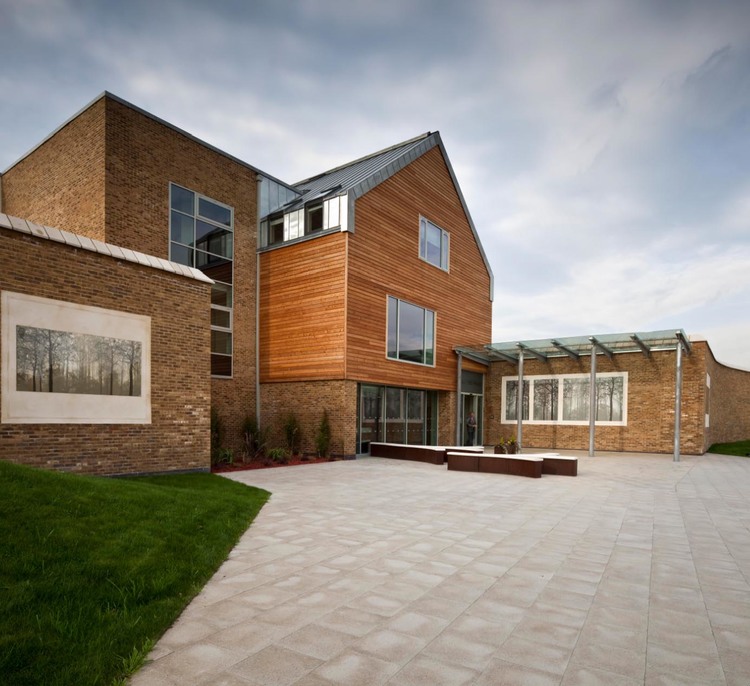
One part of the site was retained for a secure hospital: Brockfield House, which opened in 2009 and was in its own very different way equally state-of-the-art. It provides forensic mental health services for people detained under the Mental Health Act or Court Order, in conditions of low and medium security (Broadmoor Hospital, to make the obvious comparison, provides treatment and care in condition of high security). When it opened it was compared, not unkindly, with a hotel, so sensitively was it designed and so well is it equipped. There are high security fences, but the layout of the building is such that they are kept to a minimum.

Lucy and I went there last week for a Firebreak pass-out. Firebreak is a five-day course run by Essex County Fire & Rescue Service that aims to improve the lives and increase the confidence and self-esteem of a wide range of people of all ages (but mostly young people) and in all situations. The Service runs dozens of courses each year, and the one in Brockfield House must be one of the more complex to organise. Normally they take place at fire stations, but in this case all the equipment (including a fire engine) must be brought to the site each day. A regular component of the course is working with ladders, but that is clearly not an option in secure hospital. It is not always possible to find enough suitable candidates, so on this occasion there was a team of eight, rather than the usual twelve, meaning they had to work that bit harder.

After passing through security and being issued with personal alarms (which we never came close to wanting to use) we met the lead instructor, Mark Crouch, and his colleagues in the hospital gym, and then trooped out to an area at the back of the hospital where seating was set up for the spectators – ourselves, a few patients’ family members, hospital staff, and quite few graduates of previous Firebreak courses who were still at the hospital. The team of eight were put through their paces, deploying hoses, performing CPR on a dummy, and generally going through the drill. At the end they lined up (by this time in quite a prolonged shower of rain) and I presented them with their certificates (dummies, actually, the real thing being more like a log book that was inside in the dry). Then we all returned to the gym for much-needed tea and biscuits.

I wish: I wish more people could witness an event like this and see what wonderful work Mark and his colleagues are doing to improve the lives of the people they work with. The positive effect, on the current team and older graduates, was plain to see. I wish more people knew of the dedication of the staff at Brockfield House, who provide a very high level of care. I wish I could include some photographs of the drill, and of the individual team members, all of whom were delightful to talk to. I wish more of their families had been there to support them and be proud of what they had achieved in just five days. I wish them the best of luck for the future, and hope that this experience has helped speed them along the road to recovery.

It was a joyful occasion, and one for celebration, but we felt sad as we drove out through the high gates, not knowing what lay ahead for the people we had met, nor indeed what had brought them there in the first place.

All in a day’s work

The Maldon Shed.

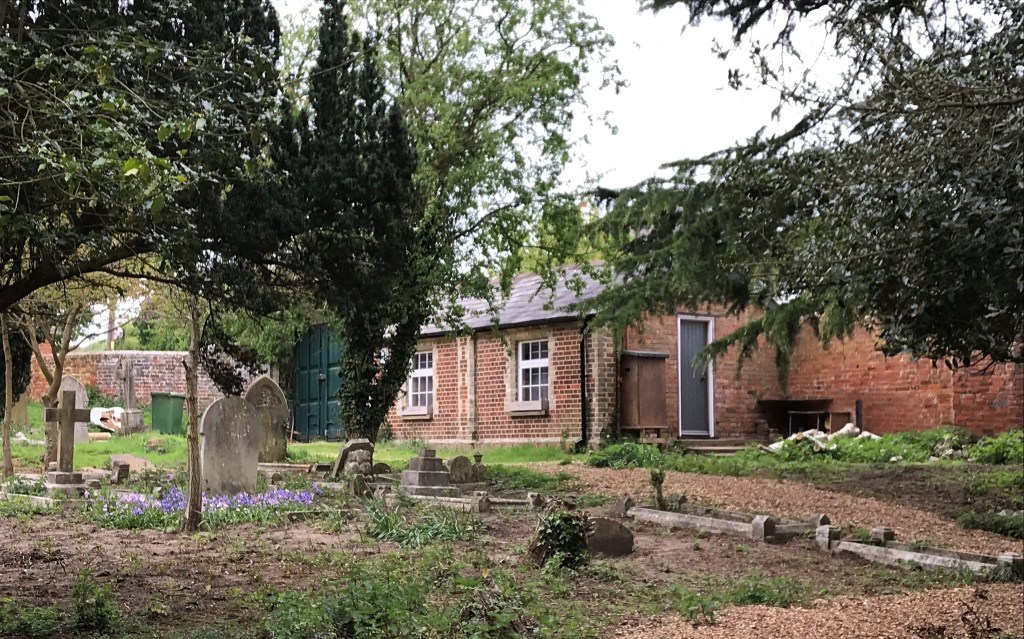
Maldon Cemetery was opened in 1855, a time when many municipal cemeteries were opened and the old town churchyards were closed in response to a number of Burial Acts passed from 1852 onwards. The Corporation (as it then was) would be surprised by the cemetery as it is today. It still lies outside the built-up area of the town, west of what was a railway line and is now a by-pass, but only one of its two chapels is still standing (and is still occasionally used). The other brick building in the cemetery was a mortuary, but is now a Shed; that is to say, one of the growing number of Sheds (usually Men’s, but not necessarily) that, to quote the Men’s Sheds Association, are similar to garden sheds – a place to pursue practical interests at leisure, to practice skills and enjoy making and mending. The difference is that garden sheds and their activities are often solitary in nature while Men’s Sheds are the opposite. They’re about social connections and friendship building, sharing skills and knowledge, and of course a lot of laughter.

The idea seems to have originated in Australia and Maldon’s Shed, opened in 2014, was one of the first in this country; it was set up with the support of Maldon District Council (which owns the building) and is run with the support of Maldon and District Community Voluntary Service (CVS). So successful has it been that the CVS has gone on to facilitate the Essex Shed Network, funded by the Essex Community Foundation and the Community Resilience Fund, and by the National Lottery Community Fund. There are now eighteen sheds in the county, either open or in the process of being set up.

Headstone of Maldon’s VC, Private Frederick Corbett, erected in 2004 over his previously unmarked grave. He was awarded the VC in 1883 and died in 1912.

Meanwhile, in the rest of the old cemetery, a lot of work has been done in recent years to clear undergrowth and to maintain the cemetery in a state where it can be enjoyed by visitors as well as providing a haven for wildlife. Much of this work is being done by volunteers, under the Council’s Parks and Countryside Community Officer, Sue Finch, and I was able to see them in action pulling brambles from hedges and tidying up round a pond. At the same time, on the western boundary of the modern cemetery, two Community Payback teams were working to clear an overgrown ditch.

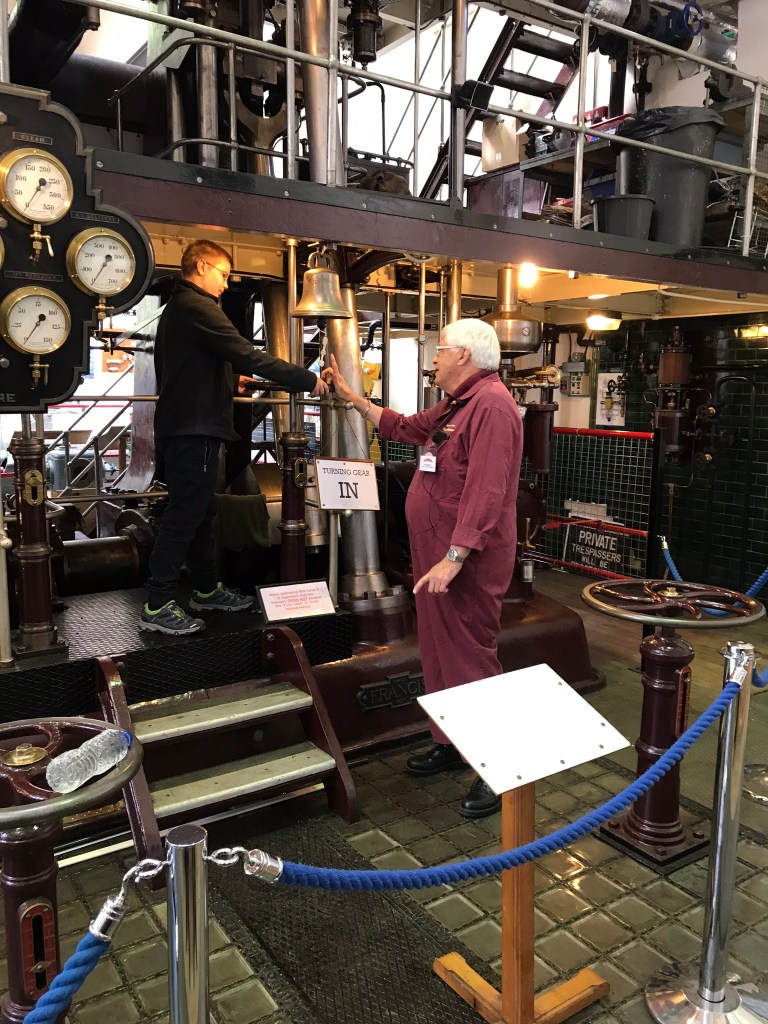
A young visitor from Germany starting up the steam pumping engine ‘Marshall’, under the watchful eye of trustee and volunteer co-ordinator Ray Anderton.

Just over a mile north of this hive of activity is another: the Museum of Power at Langford. It started life as Langford Pumping Station, completed in 1927, whose original purpose was to pump seven million gallons of drinking water every day across the county to Southend. To perform this heroic feat it was equipped with two steam-driven Lilleshall engines; a third, named Marshall, was installed in 1931, and this is the only one that survives. We saw it being run on compressed air, but on high days on holidays, or when someone is prepared to pay for the coal, it runs on steam. Around it has been collected a wondrous and varied collection of engineering artefacts, all looked after by a team of volunteers with just a single paid member of staff. It’s a wonderful place to visit, as a German family was discovering when I was there with the Chairman of Maldon District Council, Henry Bass – clearly the word is spreading.

St George’s Day in Colchester

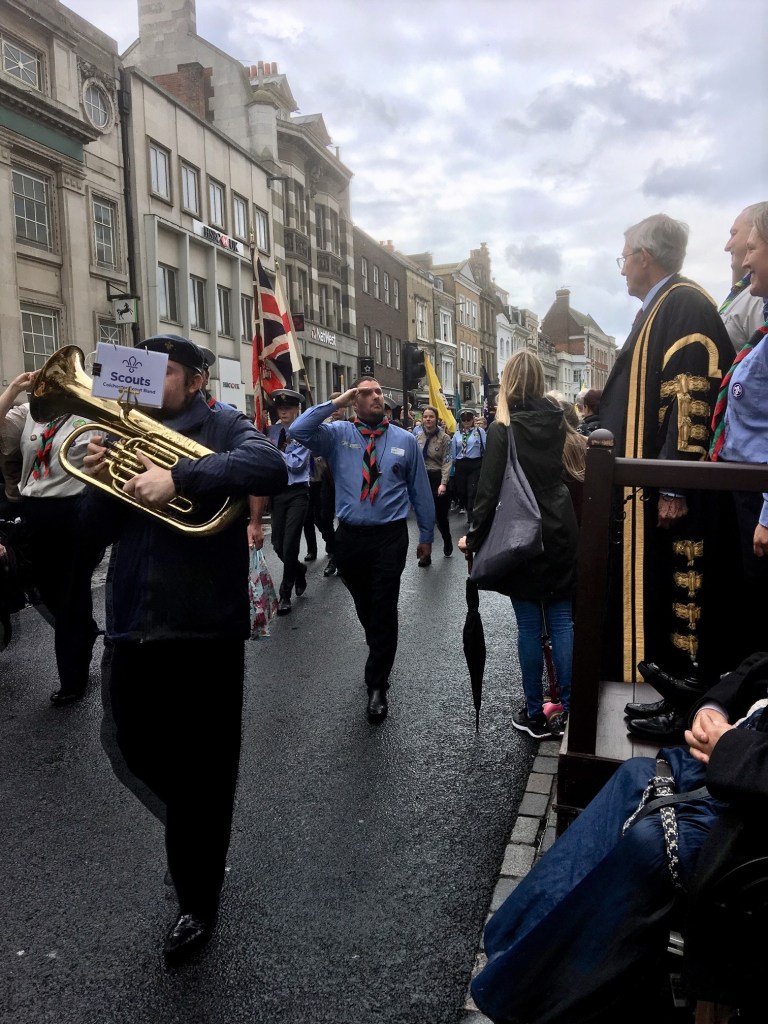
The Mayor of Colchester, Councillor Peter Chillingworth, taking the salute at the Scouts’ St George’s Day Parade

There has been some confusion this year over when to celebrate St George’s Day, much to the joy of political and theological commentators. 23 April is the normal date, but (as far as the Church of England is concerned) when a feast day falls during Easter Week, as St George’s Day did this year, it is postponed until the Monday following the First Sunday after Easter, i.e. 29 April. In Colchester, St George’s Day was celebrated this year on 28 April; that is to say, it was the day of the Civic Service for St George’s Day, and the Colchester Scouts’ St George’s Day Parade. Mercifully, as the Civic Service involved a procession from the Town Hall to St Peter’s Church, and the parade was (obviously) outside, the April showers did not do their stuff at the crucial moments, although I fear the scouts will not have escaped entirely. It was good to see so many of them marching past, in what seemed to the uninitiated a bewildering variety of uniforms.

After all that excitement, Lucy and I made our way to the Synagogue off Priory Street, where the Colchester & District Jewish Community had invited us to attend their Yom H’Shoah (Holocaust Commemoration Day) service. This was a completely new experience for us, and one that was both moving and delightful. Proceedings started with the lighting of six candles, each candle representing one million Jews lost, before the regular afternoon service, conducted mostly in Hebrew, partly sung, but with some sections in English, perhaps for the benefit of visitors like ourselves. There was then a selection of reflections and readings (in English) specifically for Yom H’Shoah. I was honoured to be asked to give one of the readings; Will Quince M.P. gave another, Celia Edey, deputising for the Lord-Lieutenant, another. There was something very simple and elegant about the service, both in the way it was conducted and in the words themselves, that added greatly to its poignancy and power. On top of that, we could not have been made to feel more welcome. This may be a small community, but it is a very vibrant one. For tea and cakes afterwards we were joined by the two Police Community Support Officers who had been assigned to keep a watchful eye over us, a reminder that the events we were commemorating have very real contemporary resonance.

What do we mean by public service?

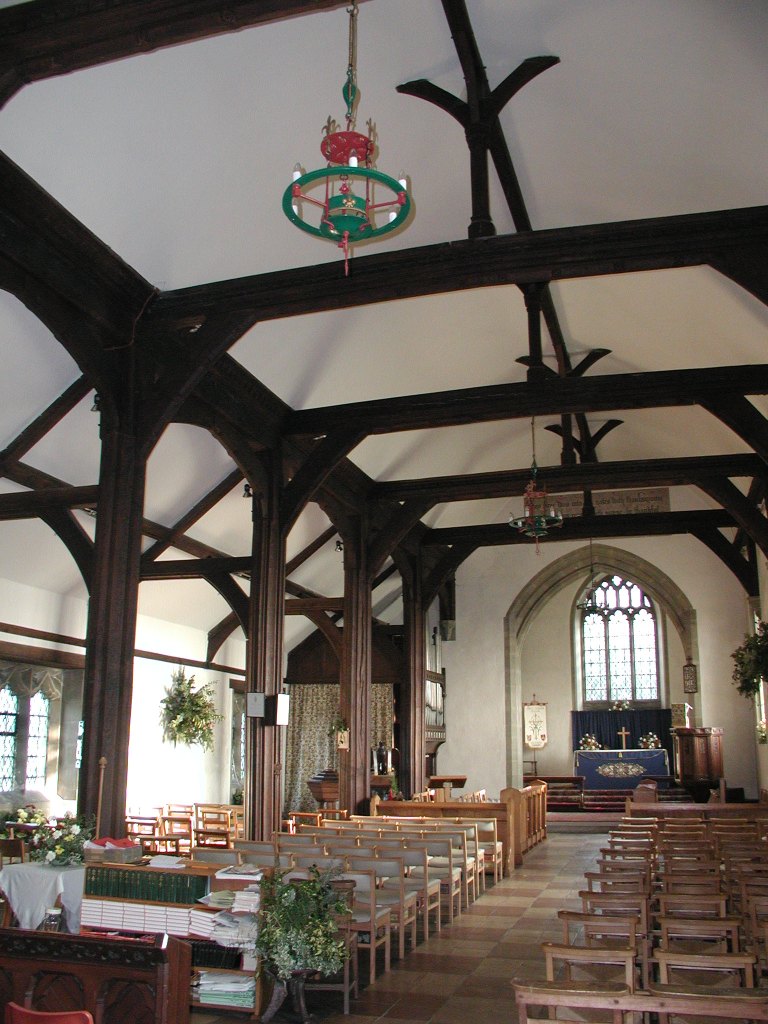
The homely interior of St Thomas’s Church, Upshire.

Public service can take many forms, as I found out one day last week when I visited Epping Forest District Council. I was a little early for my first appointment in Waltham Abbey so stopped off at St Thomas’s, Upshire, a delightful Arts and Crafts church of 1901–2 that I haven’t visited for many years. It was paid for by Sir Thomas Fowell Buxton, who was High Sheriff in 1905–6 (yet another of my predecessors it’s hard to live up to). As it happened, the church was open, because a Community Payback team were working in the churchyard, as they often do here. It’s enforced public service, to be sure, otherwise known as unpaid work, part of a community sentence, but public service nonetheless; and as well as being a punishment it benefits the church and the wider community, taking the pressure off their own volunteers and saving them the expense of hiring contractors to do the job. Nor must we forget the public service of the churchwarden who was there to open up the church, direct operations, and provide refreshments throughout the day.

Monument to Sir Thomas Fowell Buxton Bt in St Thomas’s Church, Upshire.

In Waltham Abbey, next to the new leisure centre, I saw another form of public service in operation: the District Council had organised a Community Clean Up Day, as their contribution to Keep Britain Tidy’s Great British Spring Clean. There’s an area of open grassland there between two housing estates, and dotted round the edge were the bright yellow gilets of litter-pickers; and as it was a warm sunny day, in the school holidays, lots of children were joining in with the adults. It was a good scene, with Council employees on hand to provide the necessary equipment, tackle any hazardous items that were found, and take away the rubbish afterwards.

Litter-picking in Waltham Abbey: fun for all the family.

Later in the day I visited the Jobcentre Plus at Loughton, where the regular Department of Work and Pensions staff work together with staff from the District Council to provide a service that goes way beyond what one would expect of a job centre – especially if, like me, your recent experience of such places is based on the Ken Loach film I, Daniel Blake. They do that bit extra to get people back into work or simply back on to their feet by, for example, making sure they have suitable clothes for a job interview, which seems to me to be a very good use of taxpayer’s money.

Back at home, there was a letter from the Under-Sheriff’s office with a cheque for £500 for me to send to a security guard as a reward for tackling a man who was armed with a machete and was attempting to rob a Tesco Express in Clacton. As reported in the press, the man was jailed for six years at Chelmsford Crown Court last month and the judge nominated the security guard for a High Sheriff’s Court Award in recognition of his bravery and public spiritedness. As well as receiving the cheque, he will be invited to a ceremony early next year at the Crown Court, together with other recipients of Court Awards and their families, so that we can thank them in person for what is another form of public service.

The Totham connection (i): Sir John Sammes

All Saints Church, Little Totham, Sammes monument

Great Totham cannot claim a High Sheriff as its own. The closest we can get, geographically, is Sir John Sammes, who was High Sheriff in 1606, and whose monument is in Little Totham Church. His father, also John, who had purchased the manor of Little Totham and Goldhanger in the early 1590s, lived at Langford Hall.  Young John was born in about 1576, and made a good marriage to the daughter of Sir John Garrard, a wealthy haberdasher, alderman, and Lord Mayor of London; he served as a soldier in Ireland and was knighted in 1599. He avoided being appointed sheriff in 1601, but did not escape in 1606; while in office he was fined £100 by the Court of Wards for negligence in executing process, thus demonstrating why he had previously been reluctant to serve.

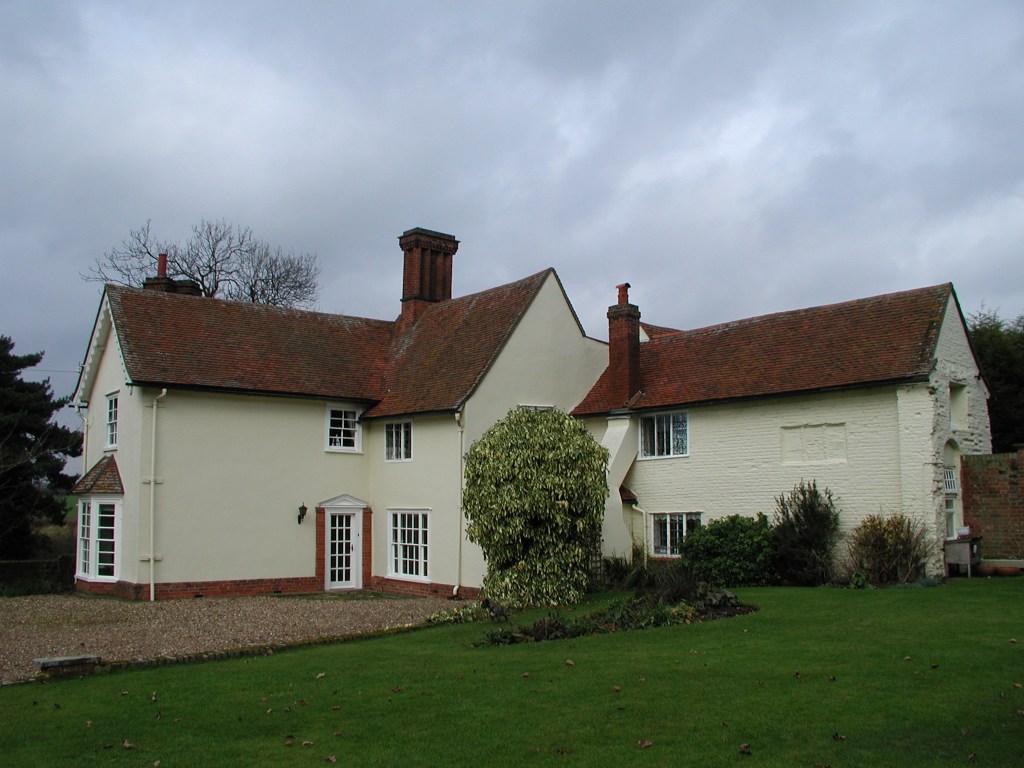
Little Totham Hall.
The painted brick range to the right is probably part of the house built by Sir John Sammes.

Sammes went on to hold many other public offices in Essex, including as a Justice of the Peace, and was elected M.P. for Maldon in 1610 and 1614 (this brief account of his life is based on the excellent History of Parliament website). At about this time he rebuilt Little Totham Hall, next to All Saints Church, of which only a fragment now remains; the expense of the house (said to have cost him about £1,400) put him badly in debt, and he fled to the United Provinces (now The Netherlands) to escape his creditors. Some time after 1625 he was appointed governor of the Dutch town of IJzendijke, where he died and was buried, but the date of his death is not known.

The monument at Little Totham, on which he appears in armour, is really the tomb of his widow Isabel, who died in 1633, and commemorates also their son Sir Garrard, who had died in 1630.

Dogs and more

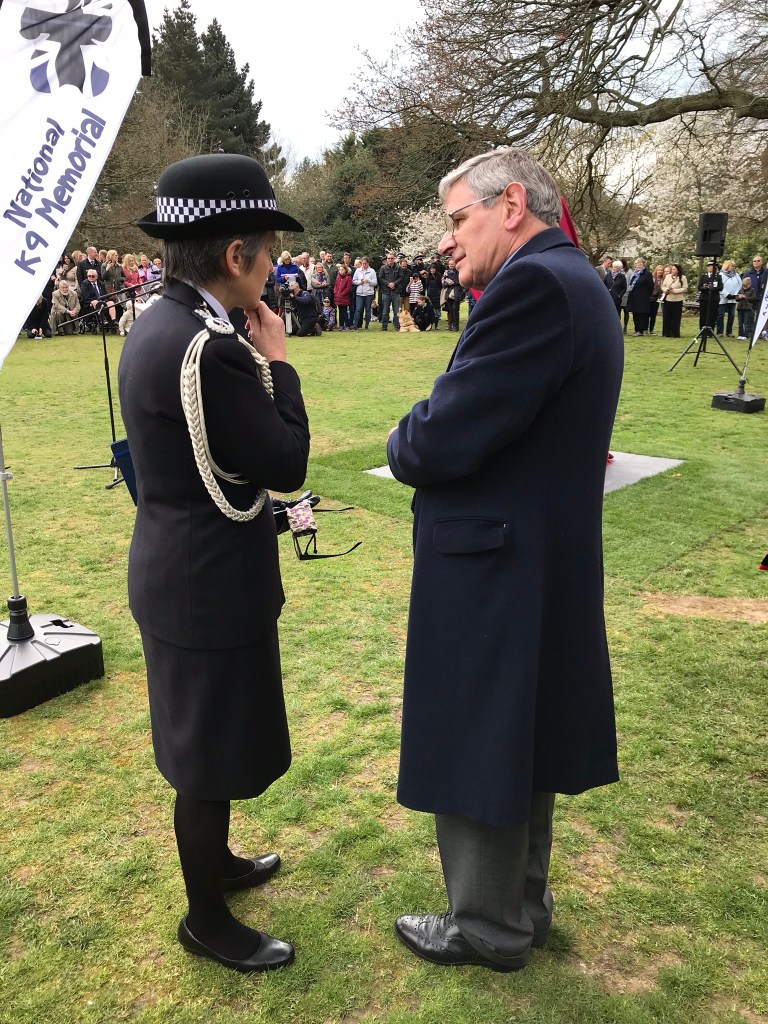
John Doubleday chatting to Cressida Dick before the unveiling.

It seems to be almost mandatory for High Sheriffs to have a dog (or two), but we are temporarily without one. However, this week more than made up for that lack, first with the unveiling on Friday 12 April of the National K9 Memorial in Oaklands Park, Chelmsford. This is a national memorial to police dogs, for which Paul Nicholls QPM, a former Essex police dog handler, has been planning and campaigning and fundraising for about thirty years. The actual memorial, a bronze statue of a handler with two dogs, is the work of Great Totham sculptor John Doubleday, and seems likely to become a firm favourite with visitors to the park, especially as it is a very child-friendly size. The memorial was blessed by the Bishop of Chelmsford and unveiled by the Metropolitan Police Commissioner Cressida Dick, in front of a crowd that included representatives of police forces (and their dogs) from across the whole country. From various speeches made, and a demonstration by Essex Police, it was interesting to learn about the contribution that dogs make to policing, often at the risk of their own lives, and to see the wonderful bond that exists between the dogs and their handlers. It is a very special relationship, not least because the handlers know they are sending their dogs into situations where they may be injured or even killed, and the dogs will defend their handlers and other officers with all that it takes.

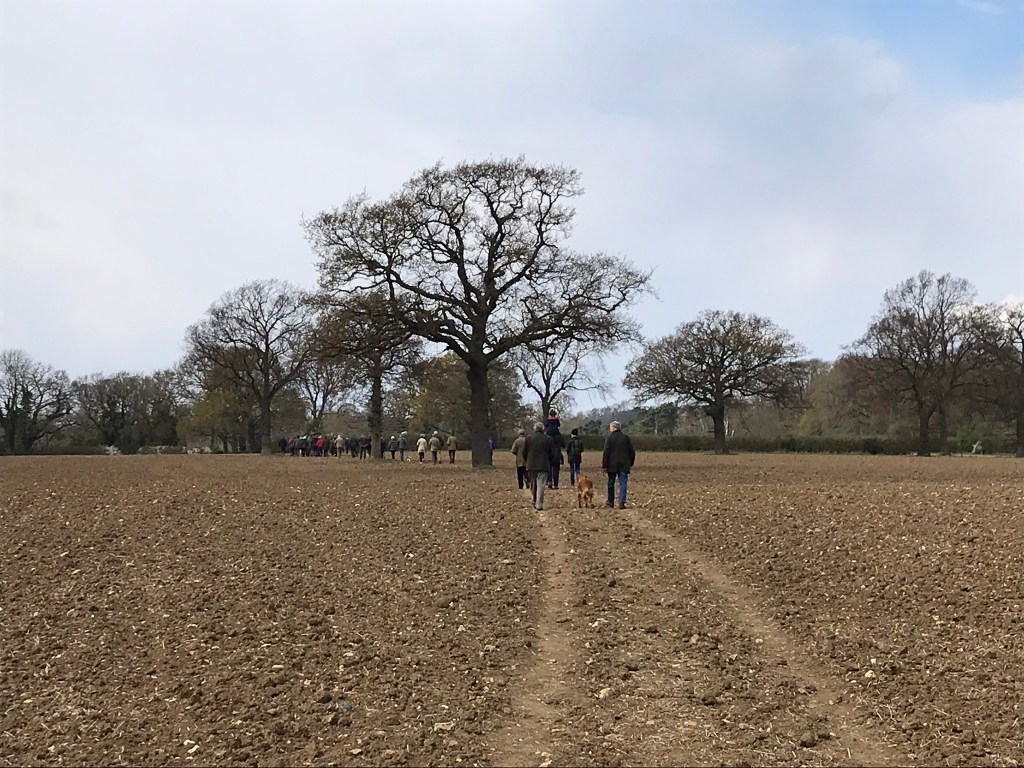
A fine bit of Essex farmland, with walkers (and dogs).

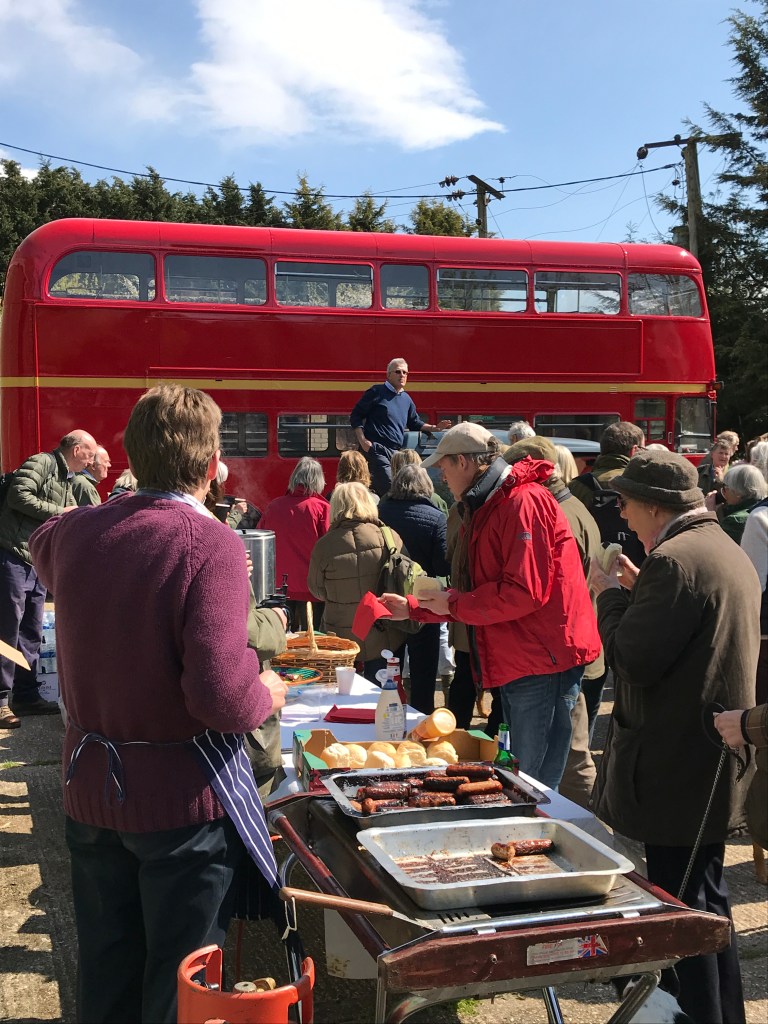
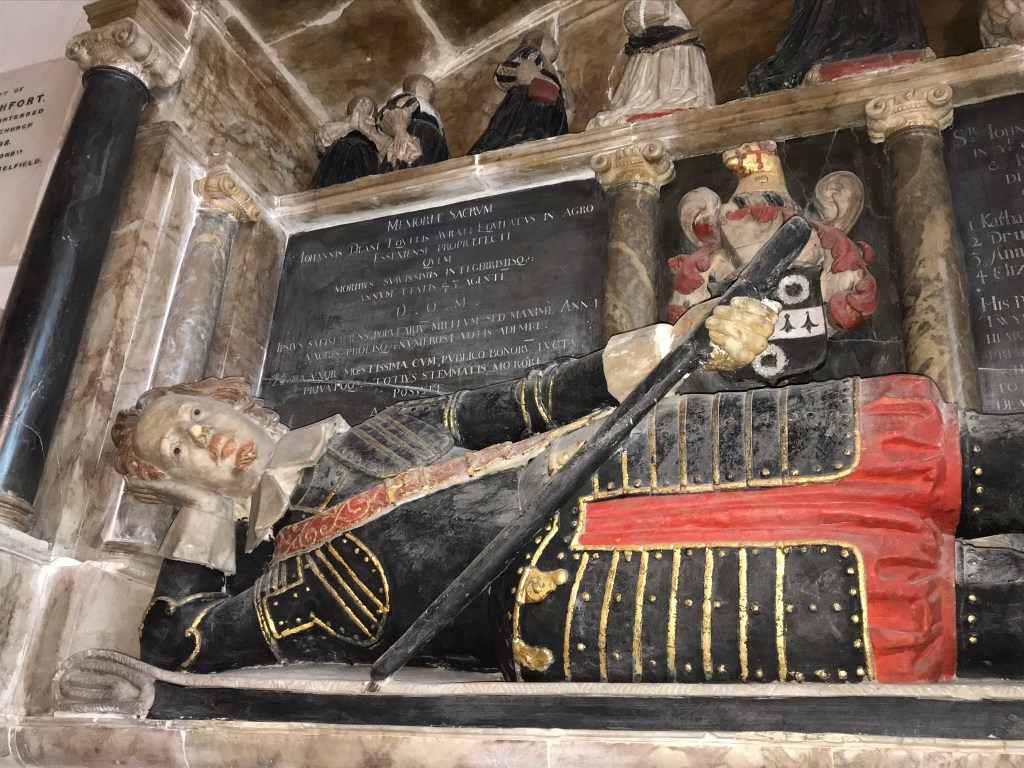
The next day found Lucy and me in the company of many more dogs, this time accompanying their owners on the annual walk that raises money for the Essex Rural Fund, under the aegis of the Rural Community Council of Essex. This well-established event is organised by David Boyle, vice president of the RCCE, who plans the route, and Nicholas Charrington, chairman of the RCCE, who ferries the walkers around in the Layer Marney Routemaster (this week, looking especially glorious having just been repainted) and organises sausages and soup for lunch. This year we started at Byham Hall, Little Maplestead, where we left our cars and were taken in the bus to Hedingham Castle. From here, after a talk on the castle from Jason Lindsay, we walked back to Byham Hall via Great Maplestead (stopping at the church to pay homage to Sir John Deane, High Sheriff 1610–11) and Little Maplestead churches. After lunch we walked to Hill Farm, Gestingthorpe, where Ashley Cooper showed us the site of the Roman villa discovered and excavated by his father, and the museum that he created in the farmhouse and outbuildings. The weather was a bit mixed (including a hail shower) but the countryside universally glorious, in a part of the county that can seem really quite remote.

Monument in St Giles, Great Maplestead, to Sir John Deane of Dynes Hall, who was High Sheriff of Essex in 1610–11 and died in 1625/6.

Two other events this week that I was fortunate to attend highlighted the achievements of people rather than dogs. On Tuesday there was a ceremony at Chelmsford City Racecourse at which John Jowers, Chairman of the County Council, paid tribute to a diverse collection of voluntary organisations who have received grants from the County Council’s Essex Fund, administered by the Essex Community Foundation; and on Friday evening Lucy and I attended the Mayor of Chelmsford’s Community Evening at Hylands House, a reception and dinner for people nominated by Chelmsford City Councillors in recognition of their contribution to the community. It is a lovely way to show our appreciation and thank people for what they do, and Yvonne Spence, whose term of office comes to an end in a few weeks, said it was for her the highlight of the mayoral year. Both events demonstrate what an enormous part voluntary bodies play in our communities, and how much we depend on those who work so hard to keep them going.